Speed is no longer a competitive advantage, it's a requirement.
Modern businesses are expected to release features faster, maintain near-zero downtime, scale instantly, and ensure airtight security. However, as cloud-native architectures grow more complex, many organizations struggle to balance innovation with stability.
Manual deployments.
Unstable CI/CD pipelines.
Kubernetes misconfigurations.
Rising cloud costs.
Overworked engineering teams.
This is where DevOps Managed Services become a game changer.
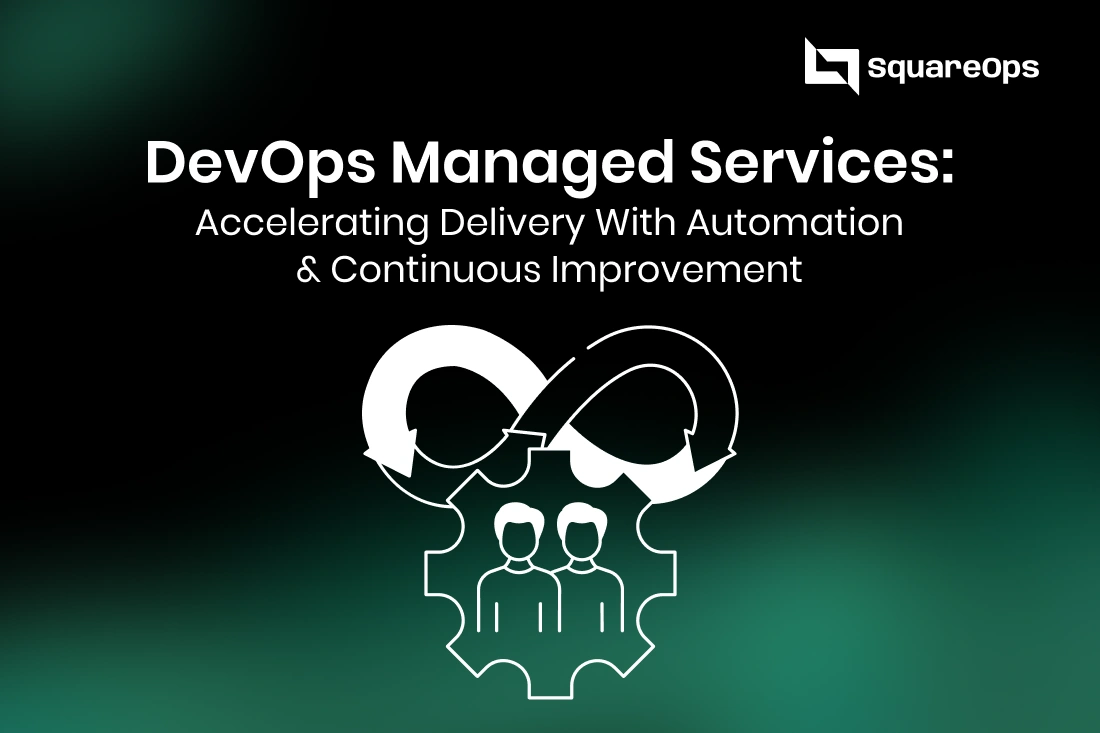
By combining automation, continuous monitoring, proactive optimization, and structured support, DevOps Managed Services help businesses accelerate software delivery while maintaining reliability and cost efficiency.
In this guide, you’ll learn:
- What DevOps Managed Services are
- How they accelerate software delivery
- The role of automation and continuous improvement
- What’s included in managed DevOps
- How they compare to in-house teams
- When your business needs them
- How to choose the right provider
If your organization wants faster releases without sacrificing stability, keep reading.
What Are DevOps Managed Services?
DevOps Managed Services are ongoing cloud and DevOps support solutions that manage, automate, monitor, and optimize your software delivery lifecycle.
Unlike one-time DevOps consulting engagements, managed services provide continuous oversight and improvement across:
- CI/CD pipelines
- Infrastructure as Code (IaC)
- Kubernetes clusters
- Cloud environments
- Monitoring and observability
- Security integration
- Incident response
The goal is simple: accelerate development while ensuring stability, scalability, and security.
Why Businesses Struggle With DevOps at Scale
DevOps works well in early stages. But as infrastructure grows, complexity increases.
Manual Deployment Bottlenecks
Manual approvals, configuration mismatches, and inconsistent workflows slow release cycles.
Unstable CI/CD Pipelines
Poorly optimized pipelines result in:
- Failed builds
- Broken deployments
- Rollbacks
- Downtime
Limited Monitoring & Observability
Without unified visibility, teams react to problems after users complain.
Cloud Cost Sprawl
Unoptimized infrastructure leads to:
- Idle resources
- Overprovisioned instances
- Rising monthly bills
Security Gaps
DevOps without DevSecOps creates compliance and vulnerability risks.
DevOps Managed Services address these challenges with structured automation and continuous improvement.
How DevOps Managed Services Accelerate Delivery
Speed comes from automation and optimization.
CI/CD Pipeline Automation
Managed DevOps teams design and optimize pipelines that:
- Automate builds and testing
- Reduce manual approvals
- Enable faster rollbacks
- Support blue-green and canary deployments
This increases release frequency while reducing failure rates.
Infrastructure as Code (IaC)
Automation tools ensure infrastructure consistency across environments.
Benefits include:
- Faster provisioning
- Reduced configuration errors
- Reproducible deployments
- Scalable environments
Kubernetes & Container Orchestration
Managed services ensure:
- Optimized resource allocation
- Stable cluster operations
- Auto-scaling
- Reduced downtime
Continuous Monitoring & Feedback Loops
Real-time monitoring enables:
- Faster issue detection
- Proactive performance optimization
- Reduced mean time to recovery (MTTR)
Automated Testing & Quality Gates
Quality assurance integrated into pipelines ensures stability before release.
Continuous Improvement: The Core of DevOps Managed Services
DevOps is not a one-time setup. It’s an evolving practice.
Continuous improvement involves:
- Analyzing incident patterns
- Optimizing deployment speed
- Refining resource usage
- Updating security policies
- Improving pipeline efficiency
- Reviewing performance metrics
Providers like SquareOps implement structured feedback loops to ensure DevOps environments evolve alongside business growth.
What Is Included in DevOps Managed Services?
A comprehensive DevOps Managed Services model typically includes:
- Cloud architecture design
- CI/CD setup and optimization
- Infrastructure automation
- Kubernetes management
- Monitoring & observability
- L1/L2/L3 support
- 24×7 monitoring
- DevSecOps integration
- Cloud cost optimization
- Incident management
- Disaster recovery planning
- Reporting and SLA tracking
This holistic approach ensures reliability and scalability.
DevOps Managed Services vs In-House DevOps Team
Factor | In-House Team | DevOps Managed Services |
Hiring Cost | High | Predictable monthly cost |
Skill Diversity | Limited to team | Multi-domain experts |
24×7 Coverage | Rare | Available |
Scalability | Slow hiring | Immediate scaling |
Tooling | Internal setup required | Mature frameworks |
Continuous Improvement | Depends on bandwidth | Structured process |
While in-house teams provide control, managed services offer scalability and broader expertise.
Benefits of DevOps Managed Services
Faster Time to Market
Automated pipelines reduce release cycles from weeks to days or even hours.
Improved Deployment Stability
Reduced failure rates mean fewer rollbacks and outages.
Reduced Downtime
Proactive monitoring prevents incidents before users notice.
Optimized Cloud Spending
Continuous cost monitoring ensures efficient resource utilization.
Stronger Security
Integrated DevSecOps practices reduce vulnerability exposure.
Higher Engineering Productivity
Internal teams focus on innovation instead of firefighting.
Real-World Example: Accelerating Releases
A SaaS company deploys twice per month due to manual processes.
After adopting DevOps Managed Services:
- CI/CD pipelines fully automated
- Infrastructure standardized with IaC
- Testing integrated into deployment workflow
- Monitoring improved
Result:
- Weekly deployments
- Reduced failure rate
- Improved customer satisfaction
- Lower operational stress
This is the power of automation plus continuous improvement.
Who Needs DevOps Managed Services?
Fast-Growing SaaS Companies
Frequent feature releases demand stable automation.
Enterprises Modernizing Legacy Systems
Digital transformation requires scalable DevOps maturity.
Startups Scaling Infrastructure
Rapid growth increases operational risk.
FinTech & Regulated Industries
Compliance and uptime are mission-critical.
E-Commerce Platforms
High traffic periods require automated scaling and stability.
When Should You Consider DevOps Managed Services?
Consider managed services if:
- Deployment failures are increasing
- Cloud costs are unpredictable
- Engineering teams are overloaded
- Downtime impacts revenue
- You lack 24×7 monitoring
- Scaling introduces instability
How to Choose the Right DevOps Managed Services Provider
Look for:
- Proven cloud-native expertise
- CI/CD and Kubernetes experience
- 24×7 monitoring capabilities
- Structured L1, L2, and L3 support
- Strong security practices
- Transparent pricing
- Demonstrated case studies
Companies like SquareOps specialize in delivering structured DevOps Managed Services that balance automation, monitoring, and continuous improvement.
DevOps Managed Services as a Growth Multiplier
DevOps is not just technical infrastructure, it's a business accelerator.
When implemented correctly, it enables:
- Faster innovation
- Improved customer experience
- Operational resilience
- Competitive advantage
- Sustainable scalability
Without structured oversight, however, DevOps can become chaotic and inefficient.
Managed services provide the discipline required for long-term success.
Conclusion
In today’s competitive landscape, businesses cannot afford slow release cycles or unstable infrastructure.
DevOps Managed Services accelerate delivery through automation, continuous monitoring, and structured improvement. They reduce downtime, optimize cloud spending, strengthen security, and empower engineering teams to focus on innovation.
If your organization is facing deployment instability, scaling challenges, or operational inefficiencies, investing in DevOps Managed Services is not just an operational decision it’s a strategic one.
With the right partner, your DevOps environment becomes a growth engine rather than a bottleneck.
Accelerate Your DevOps Maturity Today
Struggling with slow releases, unstable deployments, or rising cloud costs?
The expert team at SquareOps helps businesses implement structured DevOps Managed Services that combine automation, monitoring, and continuous optimization.
Reduce downtime. Improve release speed. Strengthen security. Scale confidently.
Book a free DevOps maturity assessment today and discover how automation and continuous improvement can transform your delivery pipeline.