Cloud infrastructure has become the backbone of modern businesses. From SaaS platforms and eCommerce stores to FinTech applications and enterprise systems, everything runs on cloud environments that must operate reliably 24/7.
But what keeps these systems stable day and night?
Behind every high-performing cloud environment is a structured support system and at the front line of that system is L1 Cloud Support.
While senior cloud architects and DevOps engineers design infrastructure, L1 cloud support teams ensure daily operational stability. They monitor alerts, respond to incidents, and prevent small issues from turning into major outages.
In this guide, we’ll cover:
- What L1 Cloud Support is
- Responsibilities of L1 cloud engineers
- Tools used in L1 cloud monitoring
- How L1 support prevents downtime
- When businesses need dedicated L1 cloud support
- Why outsourcing L1 support can improve efficiency
If your business depends on cloud infrastructure, understanding L1 Cloud Support is essential.
What Is L1 Cloud Support?
L1 Cloud Support (Level 1 Cloud Support) is the first line of operational response responsible for monitoring, identifying, and handling initial cloud infrastructure issues before escalating them to higher-level engineers.
In simple terms:
L1 Cloud Support teams monitor systems, respond to alerts, follow predefined runbooks, and ensure that cloud services continue operating smoothly.
They do not typically redesign infrastructure or perform deep architectural troubleshooting that’s handled by L2 or L3 engineers. Instead, L1 focuses on:
- Monitoring dashboards
- Acknowledging alerts
- Performing basic troubleshooting
- Restarting services if required
- Escalating complex issues
They are the operational backbone of 24/7 cloud reliability.
Where L1 Cloud Support Fits in the Support Hierarchy
Cloud support usually follows a tiered structure:
L1 – Monitoring & Initial Response
- First alert responders
- Basic troubleshooting
- Ticket logging
- Following runbooks
- Escalation management
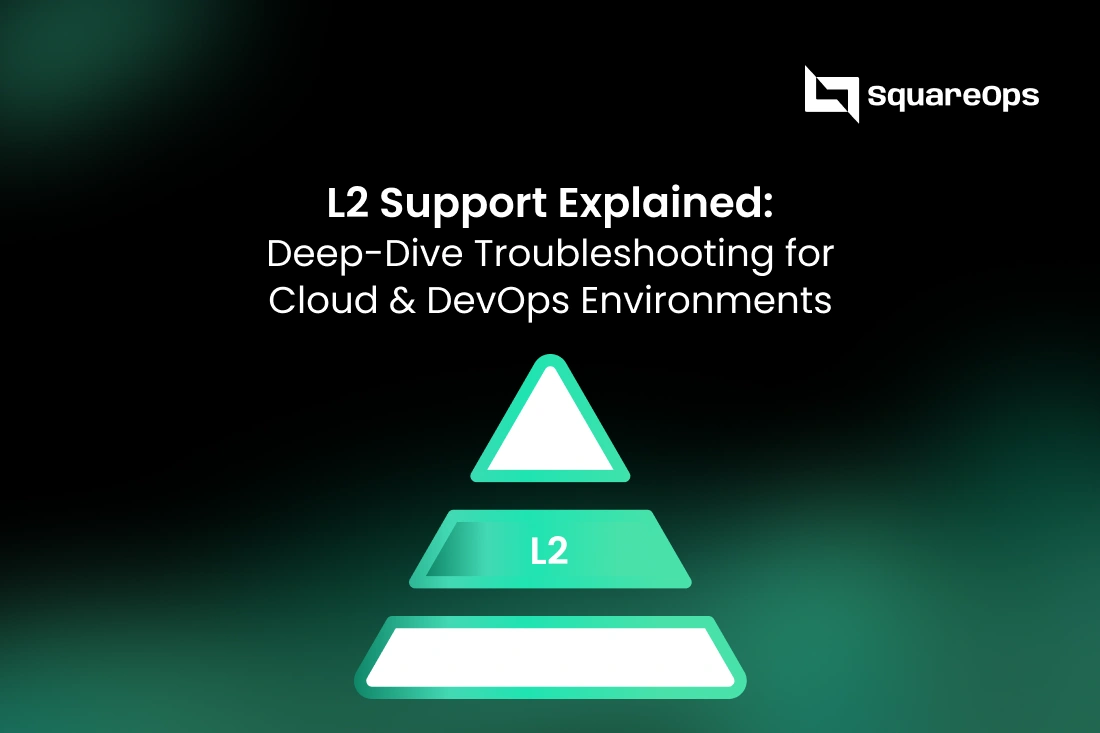
L2 – Technical Troubleshooting
- Deep issue investigation
- Configuration fixes
- Deployment-related problem resolution
- Performance tuning
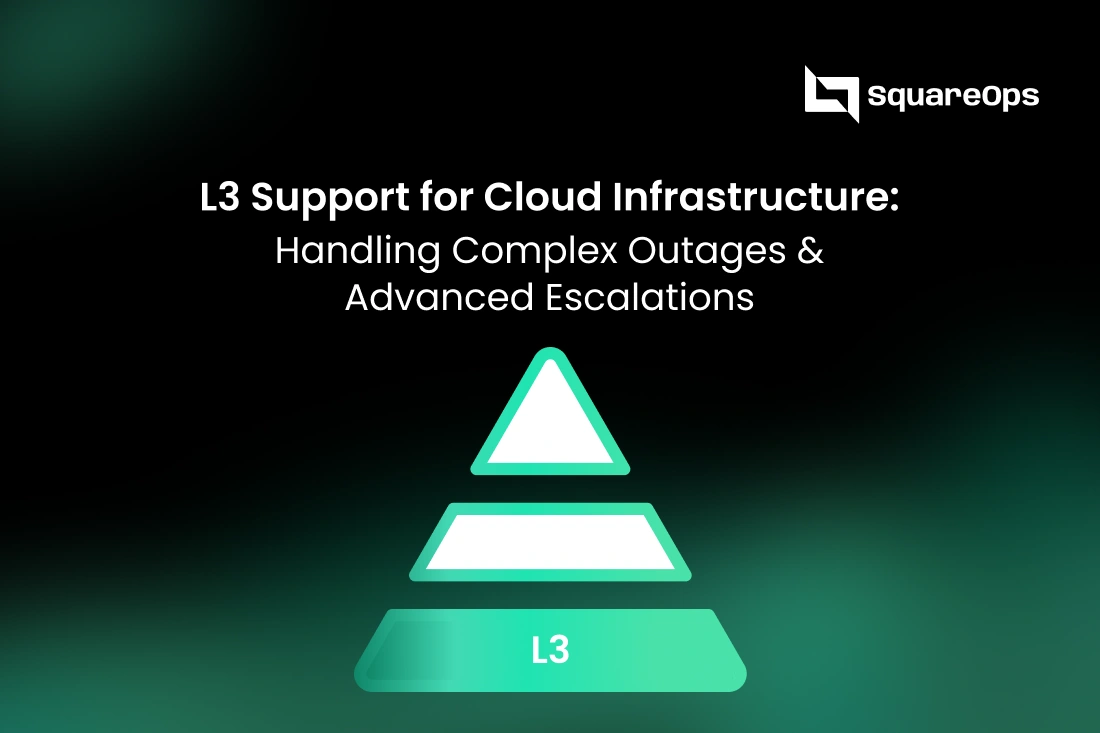
L3 – Advanced Engineering & Architecture
- Infrastructure redesign
- Complex root cause fixes
- Automation improvements
- Cloud architecture changes
Here’s a simplified comparison:
Level | Focus | Responsibility | Skill Depth |
L1 | Monitoring & Alerts | Initial troubleshooting | Operational |
L2 | Technical Fixes | Root cause resolution | Advanced |
L3 | Architecture | Infrastructure redesign | Expert |
Without L1 Cloud Support, higher-level engineers would spend valuable time handling routine alerts instead of focusing on innovation.
Core Responsibilities of L1 Cloud Support
L1 Cloud Support teams are responsible for maintaining daily operational stability.
1. Infrastructure Monitoring
They continuously monitor:
- CPU and memory usage
- Disk health
- Network performance
- Application uptime
- Kubernetes clusters
- Database performance
2. Alert Management
When alerts trigger, L1 engineers:
- Acknowledge alerts immediately
- Verify if the alert is valid
- Assess impact severity
- Take predefined action
3. Initial Troubleshooting
Common actions include:
- Restarting services
- Checking logs
- Clearing temporary resource bottlenecks
- Validating configuration status
4. Ticket Creation & Categorization
They document:
- Incident type
- Time of occurrence
- Affected systems
- Steps taken
Clear documentation improves future troubleshooting.
5. Escalation to L2 or L3
If an issue cannot be resolved within defined guidelines, L1 escalates to advanced teams with complete context and logs.
6. SLA Monitoring
They track service-level agreements and ensure response times meet defined standards.
Daily Tasks of an L1 Cloud Engineer
An L1 Cloud Engineer’s day typically includes:
- Reviewing monitoring dashboards
- Validating overnight alerts
- Checking backup status
- Verifying system health
- Testing automated recovery scripts
- Updating tickets
- Communicating with internal teams
In 24/7 operations, this work is often done in shifts to ensure continuous coverage.
Tools Used in L1 Cloud Support
L1 Cloud Support teams rely on specialized tools for monitoring and incident management.
Monitoring & Observability Tools
Used for tracking system performance:
- Infrastructure monitoring platforms
- Application performance monitoring tools
- Kubernetes monitoring dashboards
Ticketing Systems
For managing incidents and requests:
- Service desk platforms
- Incident tracking systems
- Escalation workflows
Log Management Tools
To analyze:
- Error logs
- Application logs
- Security logs
Cloud Provider Consoles
Engineers frequently use cloud dashboards such as:
- AWS Management Console
- Azure Portal
- Google Cloud Console
Incident Communication Tools
For real-time collaboration and escalation.
Using structured tooling ensures faster response and reduced downtime.
How L1 Cloud Support Prevents Downtime
Downtime rarely happens instantly it often starts as small warning signs.
L1 Cloud Support prevents outages by:
Early Detection
Monitoring alerts catch issues before systems fail.
Immediate Acknowledgment
Quick response reduces impact duration.
Following Runbooks
Standard operating procedures ensure consistent handling.
Escalation Before Crisis
Timely escalation prevents small issues from escalating into system-wide failures.
Continuous Coverage
24/7 shifts ensure no monitoring gaps.
Companies like SquareOps provide structured L1 Cloud Support as part of comprehensive managed cloud services, ensuring infrastructure reliability around the clock.
Why Businesses Outsource L1 Cloud Support
Maintaining an in-house L1 team can be expensive and operationally complex.
1. 24/7 Coverage Without Night Shift Hiring
Hiring internal staff for round-the-clock support requires multiple shifts and higher operational costs.
2. Cost Efficiency
Outsourcing offers predictable monthly pricing compared to recruitment, training, and retention expenses.
3. Reduced Engineering Burnout
Senior DevOps engineers focus on innovation instead of alert monitoring.
4. Faster Incident Response
Dedicated monitoring teams respond faster than overextended internal teams.
5. Structured SLA Processes
Professional providers follow standardized escalation and reporting procedures.
Benefits of Strong L1 Cloud Support
Faster Mean Time to Recovery (MTTR)
Early intervention reduces downtime duration.
Improved Reliability
Continuous monitoring ensures stable operations.
Better Incident Documentation
Structured logging improves future prevention strategies.
Clear Escalation Paths
Defined workflows improve operational efficiency.
Improved Customer Experience
Stable systems enhance user trust.
When Does Your Business Need Dedicated L1 Cloud Support?
You likely need L1 Cloud Support if:
- Alert volume is increasing
- Incidents occur outside business hours
- Internal engineers are overwhelmed
- You’re expanding to multi-cloud environments
- You’re managing Kubernetes clusters
- Downtime is affecting revenue
Fast-growing SaaS and FinTech companies often adopt structured L1 support to maintain operational stability during scaling.
In-House vs Managed L1 Cloud Support
Here’s a comparison:
Factor | In-House L1 | Managed L1 Cloud Support |
Coverage | Limited hours | 24/7 |
Hiring Cost | High | Predictable |
Scalability | Slow | Immediate |
Tooling | Requires setup | Pre-established |
Escalation Structure | May vary | Standardized |
Managed L1 support offers flexibility and scalability without heavy HR overhead.
Real-World Example
Imagine a SaaS platform handling global users.
At 3 AM, database memory usage spikes due to unexpected traffic.
Without L1 support:
- No one notices for hours
- Application slows down
- Customers experience errors
With L1 Cloud Support:
- Alert triggers immediately
- Engineer investigates
- Memory resources are adjusted
- Performance stabilizes
- If needed, escalates to L2
Downtime avoided. Customer trust preserved.
How to Choose the Right L1 Cloud Support Provider
When evaluating providers, look for:
- 24/7 monitoring capability
- Defined escalation policies
- Experience in cloud-native environments
- Runbook-driven operations
- Transparent reporting
- Integration with DevOps processes
Providers like SquareOps integrate L1 Cloud Support within broader Managed DevOps and 24×7 Managed Services frameworks to deliver reliable and scalable cloud operations.
L1 Cloud Support as the Foundation of Reliable Operations
While higher-level engineers design and optimize systems, L1 Cloud Support ensures daily operational stability.
They are:
- The first responders
- The monitoring backbone
- The uptime protectors
Without structured L1 support, cloud environments become reactive instead of proactive.
Reliable operations begin with strong frontline monitoring.
Final Thoughts
Cloud environments are powerful but they require structured monitoring and operational discipline.
L1 Cloud Support ensures continuous monitoring, rapid alert response, and stable daily operations. It acts as the first line of defense against downtime, performance issues, and infrastructure disruptions.
Whether you build in-house or partner with experts, strong L1 support is essential for modern cloud reliability.
If you’re looking to strengthen your cloud operations with structured monitoring and escalation processes, consider working with experienced providers like SquareOps to implement scalable L1 Cloud Support tailored to your infrastructure needs.