Modern cloud and DevOps environments are powerful but they are also complex.
Microservices, Kubernetes clusters, CI/CD pipelines, multi-cloud infrastructure, container orchestration, and automated deployments all work together to deliver seamless digital experiences. However, when something breaks, not every issue can be solved by basic monitoring or simple restarts.
This is where L2 Support plays a critical role.
While L1 teams monitor systems and handle initial alerts, L2 support engineers dive deeper identifying root causes, fixing configuration issues, resolving deployment failures, and ensuring long-term system stability.
In this guide, we’ll explain:
- What L2 Support is
- How it differs from L1 and L3
- Core responsibilities of L2 support engineers
- Tools used in cloud & DevOps troubleshooting
- When your business needs L2 support
- Why structured L2 support improves reliability
If your business depends on cloud infrastructure, understanding L2 Support is essential.
What Is L2 Support?
L2 Support (Level 2 Support) is the second tier of technical support responsible for deep-dive troubleshooting and resolving complex infrastructure, application, and DevOps-related issues that cannot be handled at Level 1.
In simple terms:
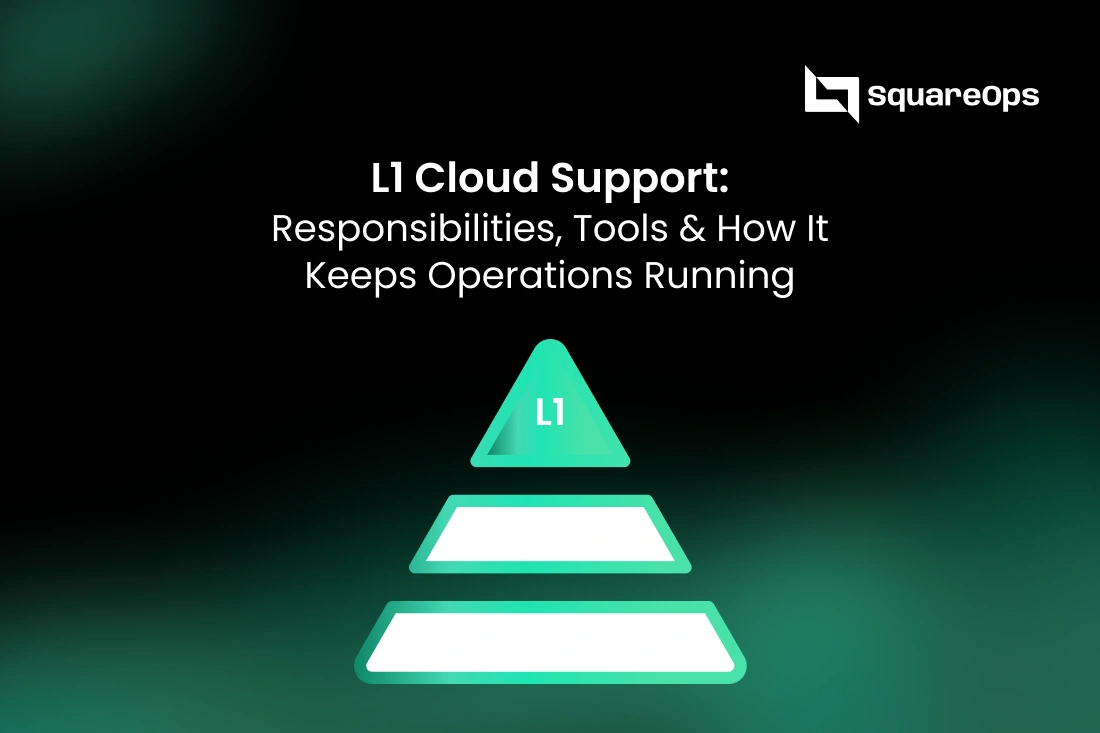
- L1 monitors and responds to alerts.
- L2 investigates and resolves technical problems.
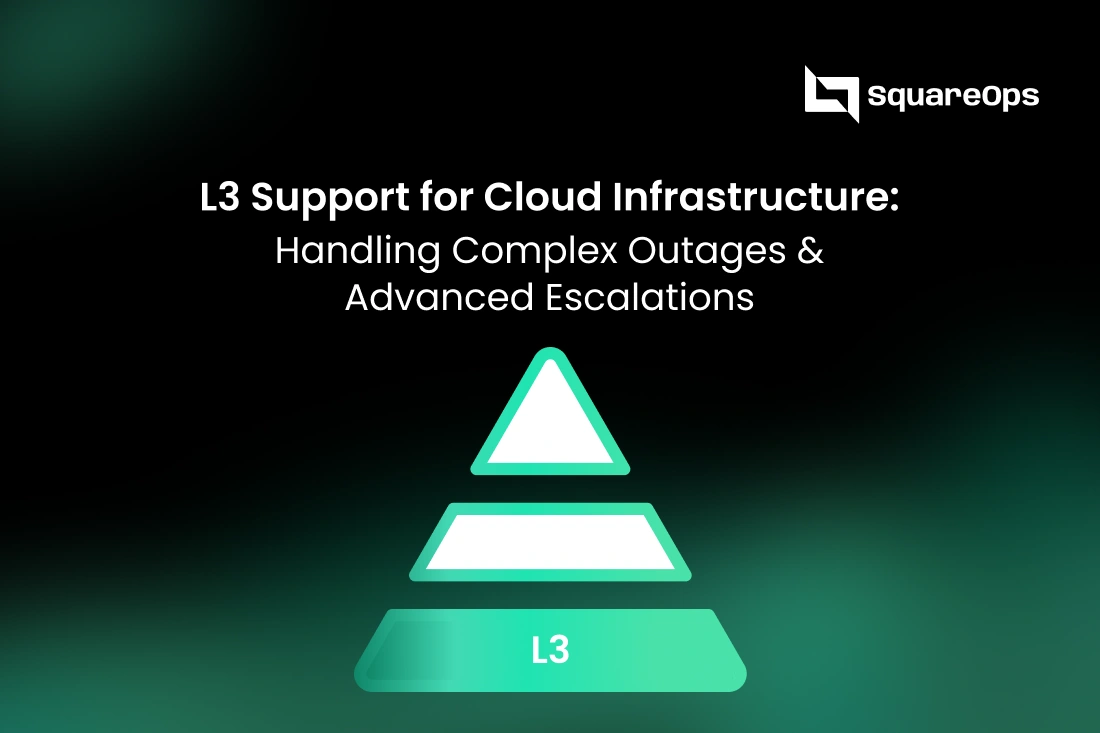
- L3 designs architecture and implements major system changes.
L2 Support engineers work on issues such as:
- Deployment failures
- Kubernetes cluster instability
- Cloud misconfigurations
- Networking issues
- IAM permission errors
- Performance bottlenecks
- Database failures
They bridge the gap between operational monitoring and advanced engineering.
Where L2 Support Fits in the Support Model
Cloud and DevOps environments typically follow a structured escalation model:
L1 – Monitoring & Basic Response
- Acknowledge alerts
- Restart services
- Follow predefined runbooks
- Escalate complex issues
L2 – Technical Troubleshooting & Resolution
- Analyze logs
- Perform root cause analysis
- Fix misconfigurations
- Optimize performance
- Stabilize pipelines
L3 – Architecture & Engineering
- Infrastructure redesign
- Automation improvements
- Advanced system reconfiguration
- Capacity planning
Here’s a comparison:
| Level | Role | Responsibility | Complexity |
|---|---|---|---|
| L1 | First responder | Alert monitoring | Basic |
| L2 | Technical resolver | Deep troubleshooting | Moderate–High |
| L3 | System architect | Structural changes | Advanced |
Without L2 Support, most operational issues would escalate unnecessarily to senior engineers — slowing innovation.
Why L2 Support Is Crucial in Cloud & DevOps Environments
Cloud-native systems are dynamic. Infrastructure changes frequently due to:
- Automated deployments
- Container orchestration
- Scaling events
- Configuration updates
- Security patches
When something fails, the cause is rarely obvious.
L2 Support ensures:
- Root causes are identified
- Recurring issues are prevented
- Deployment reliability improves
- Infrastructure stability increases
They don’t just “fix” problems they stabilize systems.
Core Responsibilities of L2 Support Engineers
L2 Support engineers handle technical complexity.
1. Root Cause Analysis (RCA)
Rather than applying temporary fixes, L2 engineers:
- Investigate system logs
- Analyze metrics
- Trace error patterns
- Identify configuration mistakes
This ensures issues don’t reoccur.
2. Infrastructure Troubleshooting
They handle issues such as:
- Load balancer misconfiguration
- Auto-scaling failures
- Network routing problems
- Resource allocation bottlenecks
3. Kubernetes & Container Troubleshooting
In modern environments, Kubernetes issues are common:
- Pod crashes
- Failed deployments
- Node instability
- Resource throttling
- Persistent volume errors
L2 engineers diagnose and resolve these issues efficiently.
4. CI/CD Pipeline Failures
When deployments fail, L2 engineers:
- Review build logs
- Validate pipeline configurations
- Debug environment variable errors
- Fix container build issues
This restores deployment reliability.
5. Security & IAM Issue Resolution
Common L2 tasks include:
- Fixing permission errors
- Correcting IAM misconfigurations
- Addressing security policy conflicts
- Responding to vulnerability alerts
6. Database & Performance Optimization
They resolve:
- Slow query issues
- Connection pool errors
- Replication delays
- Storage performance problems
Daily Tasks of an L2 Support Engineer
An L2 engineer’s typical shift may include:
- Reviewing escalated L1 tickets
- Analyzing log data
- Testing configuration fixes
- Updating infrastructure settings
- Monitoring post-fix stability
- Documenting solutions
- Coordinating with DevOps teams
Unlike L1, L2 Support requires analytical thinking and deeper technical knowledge.
Tools Used in L2 Cloud & DevOps Support
L2 Support relies on a robust toolset.
Monitoring & Observability Platforms
Used to analyze metrics and detect anomalies.
Log Aggregation Tools
Help trace root causes through centralized logs.
Kubernetes & Container Tools
Used for cluster inspection, pod analysis, and workload debugging.
CI/CD Systems
L2 engineers review pipelines, deployment logs, and integration errors.
Cloud Provider Consoles
Access to AWS, Azure, or GCP dashboards allows infrastructure-level troubleshooting.
Infrastructure as Code (IaC) Tools
Used to identify misconfigured Terraform or automation scripts.
Access to deeper tool layers differentiates L2 Support from L1.
How L2 Support Prevents Recurring Incidents
Temporary fixes reduce immediate impact but don’t prevent recurrence.
L2 Support focuses on permanent resolution.
Identifying Patterns
Repeated alerts often signal systemic issues.
L2 engineers detect patterns and fix the underlying cause.
Fixing Configuration Errors
Many cloud failures stem from small misconfigurations.
Correcting them improves long-term stability.
Improving Deployment Pipelines
L2 Support refines CI/CD reliability, reducing failed releases.
Enhancing Documentation
Well-documented resolutions improve future response times.
L2 Support in Cloud & DevOps Environments
Let’s explore real scenarios.
Kubernetes Cluster Instability
Symptoms:
- Pods restarting frequently
- High memory usage
- Node failures
L2 investigates resource limits, cluster health, and autoscaling settings.
CI/CD Deployment Failures
Symptoms:
- Build pipeline errors
- Failed container pushes
- Rollback triggers
L2 analyzes build logs and resolves configuration mismatches.
Cloud Networking Issues
Symptoms:
- Application timeouts
- Load balancer misrouting
- DNS failures
L2 examines routing tables, security groups, and firewall rules.
IAM Permission Conflicts
Symptoms:
- Access denied errors
- Unauthorized API calls
L2 corrects IAM roles and policy assignments.
Database Performance Bottlenecks
Symptoms:
- Slow response times
- Connection exhaustion
L2 tunes configuration and optimizes queries.
L2 Support vs L1 Support
| Factor | L1 Support | L2 Support |
|---|---|---|
| Scope | Monitoring | Troubleshooting |
| Technical Depth | Basic | Advanced |
| Escalation | Escalates | Resolves |
| Log Analysis | Limited | Extensive |
| Infrastructure Changes | No | Yes |
L1 ensures issues are caught.
L2 ensures they are fixed.
When Does Your Business Need Strong L2 Support?
You likely need L2 Support if:
- Incidents are becoming more complex
- Deployments frequently fail
- Kubernetes clusters require constant tuning
- Multi-cloud infrastructure is expanding
- Security misconfigurations are increasing
- Performance issues affect user experience
Fast-growing SaaS companies especially benefit from structured L2 coverage.
In-House vs Managed L2 Support
| Factor | In-House L2 | Managed L2 Support |
|---|---|---|
| Hiring Cost | High | Predictable |
| Availability | Limited hours | 24/7 optional |
| Skill Variety | Limited to team | Multi-skilled experts |
| Scalability | Slow hiring | Immediate scaling |
| Process Maturity | Varies | Structured |
Managed providers like SquareOps integrate L2 Support into broader managed cloud and DevOps services — ensuring deeper troubleshooting capability without heavy hiring costs.
Benefits of Structured L2 Support
Reduced Mean Time to Resolution (MTTR)
Deep technical investigation speeds up fixes.
Fewer Recurring Incidents
Root cause analysis prevents repeat failures.
Higher Deployment Stability
Pipeline optimization reduces release risks.
Improved Cloud Efficiency
Performance tuning improves cost efficiency.
Better SLA Compliance
Structured support enhances reliability metrics.
Real-World Example
A SaaS company experiences repeated application slowdowns during peak traffic.
L1 detects high CPU alerts.
L2 investigates and discovers:
- Incorrect auto-scaling thresholds
- Memory misallocation
- Inefficient database queries
After optimization:
- Response times improve
- Downtime incidents drop
- Customer satisfaction increases
This is the value of structured L2 Support.
How to Choose the Right L2 Support Provider
Look for:
- Proven cloud-native expertise
- Kubernetes troubleshooting experience
- CI/CD pipeline knowledge
- Structured RCA documentation
- Clear escalation model
- SLA-backed commitments
Providers like SquareOps combine L1, L2, and DevOps capabilities ensuring seamless support from monitoring to deep troubleshooting.
L2 Support as a Stability Multiplier
As infrastructure complexity grows, relying solely on L1 monitoring is not enough.
L2 Support ensures:
- Problems are fully resolved
- Systems remain optimized
- Deployments stay stable
- Infrastructure scales reliably
It’s not just a technical layer it’s a business continuity strategy.
Final Thoughts
Cloud and DevOps environments are dynamic and complex. While L1 Support ensures continuous monitoring, L2 Support provides the technical expertise required to stabilize and optimize infrastructure.
Without strong L2 coverage, recurring incidents, deployment failures, and performance bottlenecks can slow business growth.
If your organization wants to reduce downtime, improve reliability, and strengthen DevOps stability, consider structured L2 Support as part of a comprehensive managed cloud strategy.
Strengthen Your Cloud Stability with Expert L2 Support
Recurring cloud issues, failed deployments, or performance bottlenecks slowing your growth? Don’t let minor technical problems turn into costly outages. Our expert L2 Support engineers provide deep-dive troubleshooting, root cause analysis, and long-term fixes to keep your cloud and DevOps environments stable and scalable. Reduce downtime, improve reliability, and empower your team to focus on innovation. Book a free cloud infrastructure assessment today and discover how structured L2 Support can protect your operations and accelerate growth.