Cloud infrastructure is designed for scalability, resilience, and performance but when complex failures occur, they can bring entire systems to a halt.
A multi-region outage. A Kubernetes control plane crash. A cascading CI/CD deployment failure. A security breach affecting production workloads.
These are not L1 or L2 problems.
They require L3 Support, the highest level of technical escalation responsible for resolving complex cloud infrastructure incidents and implementing architectural fixes.
In modern cloud-native and DevOps environments, L3 Support plays a critical role in business continuity, system resilience, and long-term reliability.
In this guide, you’ll learn:
- What L3 Support is
- How it differs from L1 and L2
- Core responsibilities of L3 engineers
- Real-world L3-level incidents
- When your business needs L3 Support
- Why managed L3 expertise strengthens reliability
If your infrastructure is mission-critical, understanding L3 Support is essential.
What Is L3 Support?
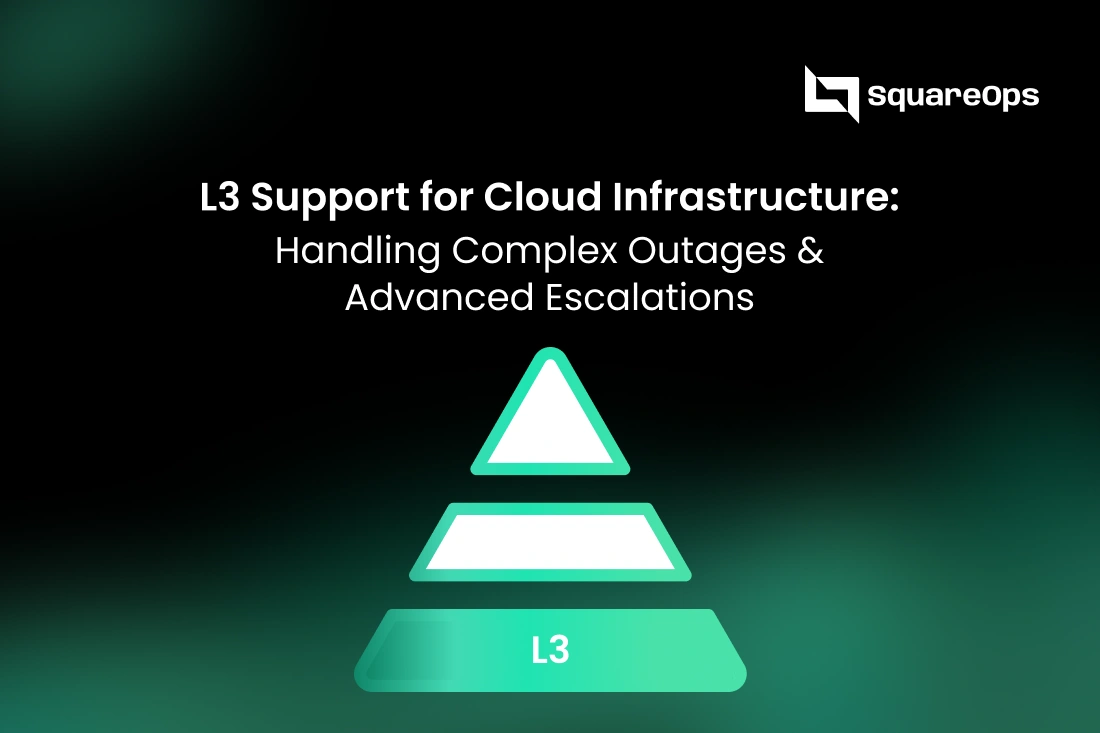
L3 Support (Level 3 Support) is the highest tier of technical support responsible for handling complex cloud infrastructure issues, architectural failures, and advanced escalations that cannot be resolved by L1 or L2 teams.
While:
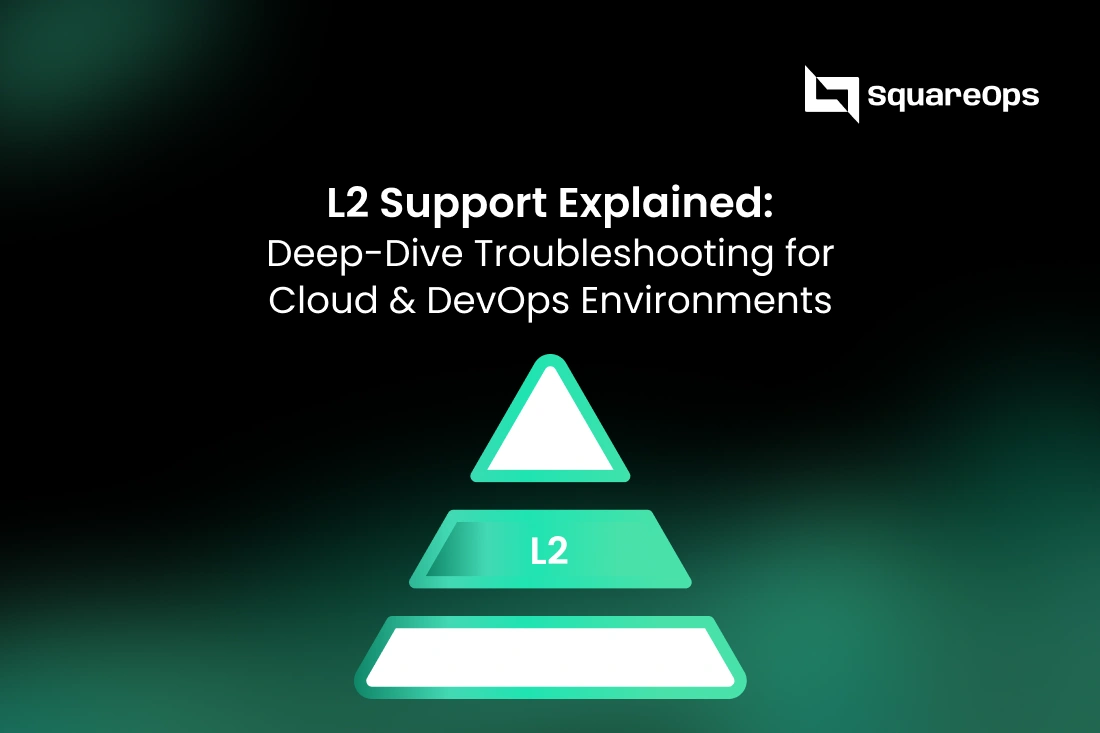
- L1 handles monitoring and basic troubleshooting
- L2 performs deep technical fixes
L3 Support focuses on:
- Architectural-level problem solving
- System redesign and optimization
- Complex outage resolution
- Disaster recovery implementation
- Root cause elimination at the infrastructure level
L3 engineers are typically senior cloud architects, DevOps experts, or infrastructure specialists with deep technical expertise.
Where L3 Support Fits in the Escalation Model
Cloud and DevOps environments operate on a tiered support structure.
L1 – Monitoring & First Response
- Alert acknowledgment
- Basic troubleshooting
- Service restarts
- Ticket logging
L2 – Technical Troubleshooting
- Log analysis
- Configuration fixes
- Deployment debugging
- Kubernetes issue resolution
L3 – Architectural Resolution
- Infrastructure redesign
- Advanced root cause elimination
- Multi-system incident recovery
- Disaster recovery activation
- Security breach containment
Here’s a comparison:
Level | Focus | Responsibility | Complexity |
L1 | Monitoring | Initial response | Basic |
L2 | Troubleshooting | Technical fixes | Moderate |
L3 | Architecture | Complex system resolution | Advanced |
Without L3 Support, large-scale incidents can remain unresolved or recur frequently.
Why L3 Support Is Critical for Cloud Infrastructure
Modern cloud environments are highly distributed.
You may be running:
- Multi-region deployments
- Kubernetes clusters
- Microservices architectures
- Auto-scaling infrastructure
- Infrastructure as Code
- Continuous deployment pipelines
When these systems interact, failures can become complex and interconnected.
L3 Support ensures:
- Structural weaknesses are corrected
- Infrastructure design flaws are addressed
- Recovery plans are executed effectively
- Business continuity is maintained
Core Responsibilities of L3 Support Engineers
L3 Support engineers operate at an expert level.
1. Handling Complex Outages
Examples include:
- Multi-region cloud service disruptions
- Cross-cluster Kubernetes failures
- Load balancer routing breakdowns
- Data replication failures
L3 engineers coordinate recovery across systems.
2. Root Cause Analysis Across Distributed Systems
L3 Support goes beyond symptom fixing.
They analyze:
- Network dependencies
- Infrastructure logs
- Automation scripts
- Cloud service integrations
To identify systemic weaknesses.
3. Infrastructure Redesign
If recurring incidents occur due to architectural limitations, L3 engineers:
- Redesign scaling strategies
- Reconfigure networking layers
- Optimize storage architecture
- Implement high-availability improvements
4. Kubernetes Cluster Recovery
Complex issues like:
- Control plane instability
- Node corruption
- Cluster-wide scheduling failures
Requires deep Kubernetes expertise.
5. Disaster Recovery Activation
When primary systems fail, L3 Support executes:
- Backup restoration
- Region failover
- Traffic rerouting
- Infrastructure rebuilding
6. Security Incident Handling
In the event of breaches:
- Systems are isolated
- Vulnerabilities patched
- Access controls reset
- Compliance teams notified
7. Advanced Automation Improvements
L3 engineers enhance Infrastructure as Code and CI/CD systems to prevent future incidents.
Real-World Examples of L3-Level Incidents
Let’s examine scenarios where L3 Support becomes critical.
Multi-Region Cloud Failure
A SaaS platform runs workloads in two regions.
A networking misconfiguration causes replication failure and traffic routing issues.
L3 Support:
- Diagnoses routing tables
- Adjusts DNS failover
- Restores synchronization
- Implements redundancy improvements
Kubernetes Control Plane Crash
The control plane becomes unstable due to misconfigured resource quotas.
L3 engineers:
- Analyze etcd logs
- Rebuild control plane nodes
- Adjust resource management policies
- Strengthen cluster resilience
CI/CD System-Wide Failure
An update to pipeline configuration breaks deployments across environments.
L3 Support:
- Identifies faulty automation script
- Rolls back changes
- Implements validation checks
- Restores deployment continuity
Data Corruption Incident
A storage misconfiguration causes partial data inconsistency.
L3 engineers:
- Identify corruption source
- Restore backups
- Strengthen validation systems
- Implement monitoring improvements
Tools & Expertise Required for L3 Support
L3 engineers require advanced skillsets.
Deep Cloud Provider Expertise
- AWS architecture
- Azure infrastructure
- GCP networking
Kubernetes Internals Knowledge
Understanding cluster behavior, control planes, and node management.
Advanced Networking Knowledge
- VPC design
- Load balancing
- DNS management
- Security groups
Infrastructure as Code Mastery
Analyzing and modifying automation scripts safely.
Advanced Observability & Tracing
Using metrics, logs, and distributed tracing to detect systemic issues.
Security & Compliance Knowledge
Ensuring incidents align with regulatory requirements.
L3 Support vs L2 Support
Factor | L2 Support | L3 Support |
Scope | Technical troubleshooting | Architectural resolution |
Skill Level | Advanced | Expert |
Infrastructure Changes | Limited | Full redesign capability |
Incident Complexity | Moderate | High |
Escalation Source | From L1 | From L2 |
L2 fixes issues.
L3 prevents systemic failure.
When Does Your Business Need L3 Support?
You likely need L3 Support if:
- Major outages impact revenue
- Infrastructure spans multiple regions
- Kubernetes clusters are large-scale
- Compliance requirements are strict
- Disaster recovery is critical
- Scaling exposes architectural weaknesses
Enterprises, FinTech platforms, and high-growth SaaS businesses benefit most from structured L3 capabilities.
In-House vs Managed L3 Support
Hiring senior cloud architects internally can be expensive.
Factor | In-House L3 | Managed L3 Support |
Salary Cost | Very High | Predictable monthly cost |
Availability | Business hours | 24/7 optional |
Skill Diversity | Limited to few individuals | Multi-expert team |
Scalability | Slow hiring | Immediate support |
Incident Coverage | May depend on availability | Structured escalation |
Managed providers like SquareOps integrate L3 Support within a broader managed DevOps framework ensuring seamless escalation from L1 to L3.
How L3 Support Strengthens Business Continuity
L3 Support delivers measurable business benefits.
Faster Recovery from Major Incidents
Structured escalation reduces prolonged downtime.
Stronger Infrastructure Resilience
Architectural improvements prevent recurrence.
Improved Scalability
Optimized infrastructure supports growth.
Reduced Long-Term Costs
Preventing recurring incidents lowers operational expenses.
Greater Stakeholder Confidence
Reliable systems build customer trust.
Why Integrated L1, L2 & L3 Support Matters
Isolated support tiers can create communication gaps.
Integrated L1–L3 Support ensures:
- Smooth escalation
- Shared documentation
- Faster resolution
- Consistent monitoring
- Unified DevOps alignment
Providers like SquareOps offer end-to-end support across all levels, strengthening cloud reliability from monitoring to architecture redesign.
Real Business Impact Example
A FinTech platform experiences recurring high-latency incidents during peak traffic.
L1 detects alerts.
L2 investigates logs.
L3 identifies architectural bottlenecks in load balancing and database replication.
After redesign:
- Latency drops significantly
- Outages stop recurring
- Customer satisfaction improves
- Compliance requirements are strengthened
This is the strategic value of L3 Support.
How to Choose the Right L3 Support Provider
Look for:
- Certified cloud architects
- Proven outage handling experience
- Kubernetes expertise
- Disaster recovery planning capability
- Strong DevOps integration
- SLA-backed commitments
Your L3 Support provider should act as a strategic infrastructure partner not just a troubleshooting team.
Final Thoughts
As cloud and DevOps environments grow more sophisticated, infrastructure failures become more complex.
L1 ensures monitoring.
L2 ensures troubleshooting.
L3 ensures resilience.
Without strong L3 Support, complex outages can damage revenue, reputation, and customer trust.
If your business depends on cloud infrastructure reliability, investing in structured L3 Support is not optional, it's strategic.
To strengthen your cloud resilience and handle advanced escalations with confidence, partner with experienced experts like SquareOps and ensure your infrastructure is built for stability, scalability, and long-term growth.