
32nd Avenue
GeneralHow SquareOps Modernized and Scaled 32nd Avenue's Applications on AWS EKS With Karpenter
How SquareOps moved 32nd Avenue's valet parking, restaurant and ERP workloads to AWS EKS with Karpenter autoscaling and ...
DexKor had to ship a multi-tenant enterprise platform on Kubernetes while the whole team was focused on the product, not on infrastructure.
SquareOps set DexKor up on its Atmosly internal developer platform, so developers could own the full deployment lifecycle without learning the details of Kubernetes, Helm, networking and cloud IAM.
DexKor shows that an early-stage SaaS team does not need a DevOps team to run production Kubernetes. With SquareOps and Atmosly handling cluster setup, environment management and CI/CD, a team of under ten ships updates daily to enterprise customers on a platform that grows with each deal.
One week. SquareOps and Atmosly provisioned the AWS EKS cluster, set up the CI/CD pipelines and brought up the first tenant environment within that time.
Each customer gets a dedicated environment created by cloning a configured one. It carries its own services and configuration, and takes minutes rather than the multiple days it used to take.
No. The team of under ten manages deployments and environments through Atmosly, so the developers building the product also run the infrastructure.
Several times a day, including weekends, through automated build, test and deploy pipelines.
See how we've helped other businesses transform their infrastructure.

How SquareOps moved 32nd Avenue's valet parking, restaurant and ERP workloads to AWS EKS with Karpenter autoscaling and ...

How SquareOps helped Nimbbl's 40-person engineering team self-manage non-prod Kubernetes environments on AWS EKS, with s...
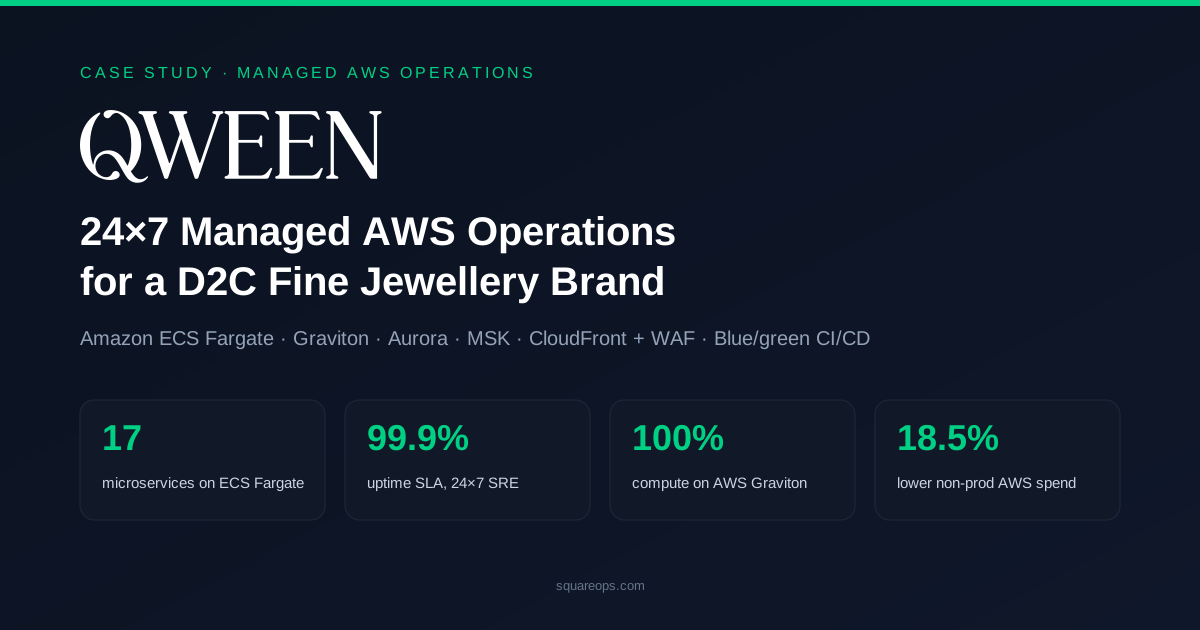

How SquareOps built and runs QWEEN Jewels' 17-microservice AWS ECS platform: 24×7 SRE, 99.9% uptime SLA, Graviton migrat...