












What DevSecOps Consulting Covers
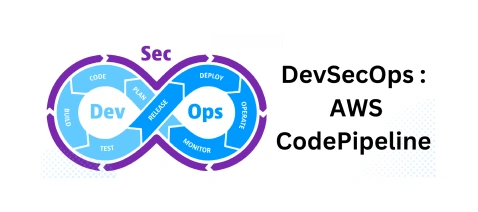
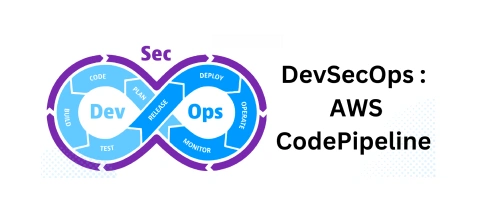
DevSecOps consulting moves security out of the pre-release review and into the pipeline your team already runs. Each stage gets the check that fits it. Secret detection at commit, SAST and dependency analysis at build, image and IaC scanning before deploy. We add those gates to your existing CI/CD pipelines — GitHub Actions, GitLab CI, Jenkins, or AWS CodePipeline.
Tools alone do not make a program. Findings need owners, thresholds, and a triage path, or every build ships with warnings nobody reads. We tune rulesets, set which severities block a merge, and route the rest to the team that owns the code. Policy-as-code gates in Kubernetes and Terraform keep the fix from regressing.
This work sits between two neighbouring engagements. Cloud security covers runtime account posture: IAM, network, CSPM, and threat detection. VAPT is the manual, adversarial test of a running application. DevSecOps covers the build and delivery path between them.
What's Included in Our DevSecOps Consulting Services
Scope is organised by pipeline stage, in the order your code travels. Most engagements start with the assessment and add gates one stage at a time.
Pipeline Security Assessment
We inventory every repository, pipeline, registry, and deploy path, then trace where an unreviewed change can reach production. You get a gap list ranked by exploitability and effort, mapped to the stage that should have caught each one.
In practice: the DevSecOps review behind CIMET's AWS CodePipeline rebuild.
Secret Detection and Pre-Commit Gates
Pre-commit hooks and CI scanning with Gitleaks or GitGuardian stop credentials, tokens, and private keys entering the repository. Git history is scanned once, leaked values are rotated, and applications read secrets from AWS Secrets Manager, Vault, or SSM Parameter Store at runtime.
In practice: the Secrets Manager and KMS injection we built for CIMET.
SAST and Software Composition Analysis
SonarQube, Semgrep, or the SAST engine you already license runs on every pull request. Dependency and licence analysis runs beside it, using Trivy, OWASP Dependency-Check, or Snyk. Severity thresholds decide what blocks a merge and what becomes a tracked issue with an owner.
DAST Against Ephemeral Environments
OWASP ZAP runs against a throwaway deployment of the build, catching authentication, injection, and header issues static analysis cannot see. The scan runs off the critical path so pull request feedback stays fast.
Container Image Scanning and SBOM Generation
Images are scanned with Trivy or Aqua before they reach a registry. Each build publishes a CycloneDX or SPDX SBOM alongside the artifact. Our write-up on Trivy for image scanning and SBOM generation covers the tooling in detail.
IaC Scanning and Policy-as-Code Gates
Checkov, tfsec, or Terrascan validate Terraform before apply, and OPA Gatekeeper or Kyverno enforce admission policy in the cluster. Rules cover public buckets, open security groups, unencrypted volumes, privileged pods, and unsigned images.
CI/CD Pipeline Security and Runner Hardening
The pipeline itself is an attack path. We replace long-lived cloud keys with OIDC federation into short-lived roles and scope runner permissions per job. We also pin third-party actions to a digest, protect branches, and require reviewed merges. Our guide to CI/CD security best practices lists the full control set.
Runtime Detection Fed Back Into the Pipeline
Findings do not stop at deploy. GuardDuty, Security Hub, Falco, and Aqua runtime policies send production detections back into the backlog. Each one also updates the pipeline rule that should have caught it. Account-level posture work sits in our cloud security engagements.
In practice: the centralised multi-account security posture we built for Synaptic.
Compliance Controls and Audit Evidence
We map control requirements from SOC 2, ISO 27001, HIPAA, and PCI-DSS to named pipeline checks. Each build then produces the evidence an auditor asks for. Scan results, approvals, and SBOMs are retained as artifacts and exported per release.
DevSecOps Challenges We Solve
Security review starts after the code is written
One review before release finds problems when the design is fixed and the deadline is close. The team then chooses between shipping late and shipping with known issues.
Our Solution
Checks move into stages that already run: secret scanning at commit, SAST and dependency analysis on the pull request, image and IaC scanning before deploy. In practice: the DevSecOps stages we added to CIMET's AWS CodePipeline.
Scanners run but nobody owns the findings
Tools get installed, produce thousands of alerts, and every build ships with warnings nobody reads. False positives train the team to ignore the output entirely.
Our Solution
We tune rulesets to your codebase and set the severity threshold that blocks a merge. Everything else routes to the owning team with a remediation SLA. Noise drops until the remaining findings are worth reading.
Secrets reach Git and are rotated by hand
Credentials end up in commits, CI variables, and config files. Rotation is manual, so nothing gets rotated until an incident forces it.
Our Solution
Pre-commit and CI secret scanning block new leaks. Git history is scanned and rotated once, then applications read from AWS Secrets Manager, Vault, or SSM at runtime. In practice: encrypted secret injection at build time for CIMET.
No one can list which builds contain a vulnerable library
A critical CVE is published. Answering "are we affected" then takes days of manual dependency checks across every service.
Our Solution
Every build publishes a CycloneDX SBOM alongside the artifact, and dependency scanning runs on a schedule as well as on commit. The affected-service list becomes a query instead of an investigation.
CI/CD runners hold long-lived cloud credentials
Build agents often carry static access keys with broad permissions. Anyone who can edit a workflow file can use them, and the keys rarely get rotated.
Our Solution
We replace static keys with OIDC federation into short-lived roles and scope permissions per job. We pin third-party actions to a digest and enforce branch protection with required reviews.
Auditors ask for evidence the pipeline does not produce
SOC 2 and ISO 27001 require proof that checks ran on every change. When results live only in ephemeral build logs, that proof is rebuilt by hand before each audit.
Our Solution
Controls are mapped to named pipeline checks, scan results and approvals are retained as artifacts, and evidence is exported per release. In practice: the ISO 27001-aligned security architecture we built for Synaptic.
How a DevSecOps Consulting Engagement Works
Five stages from the first pipeline review to a security program your team runs without us.
Most teams arrive with CI/CD and one or two scanners already in place, so we start by auditing what runs today. Teams rebuilding delivery from scratch pair this with CI/CD consulting, as on the Tompkins Robotics pipeline rebuild.
Assess
We inventory repositories, pipelines, registries, and deploy paths, then test where an unreviewed change can reach production. The output is a gap list ranked by exploitability and effort, mapped to the stage that should catch it.
Design
We pick scanners for your languages and cloud, then define gate behaviour and severity thresholds per stage. We also agree who triages what. Policy-as-code rules are written and reviewed before anything is enforced.
Implement
Gates go live one stage at a time, starting in warn-only mode. Secret detection, SAST, SCA, image scanning, IaC validation, and admission policy attach to your existing pipelines rather than replacing them.
Tune and Enable
We suppress false positives and baseline pre-existing findings so the backlog does not stall delivery. Gates then switch from warn to block. Developers get short working sessions on reading findings and fixing at source.
Operate
Managed DevSecOps keeps scanners, rules, and baselines current, triages new findings, and reports mean time to remediate. Runtime detections are reviewed monthly and fed back into pipeline rules.
Ready to put security gates in your pipeline?
Get a free DevSecOps assessment. We review your pipelines, list the missing gates, and hand back a prioritised remediation plan.
Talk to a DevSecOps ConsultantDevSecOps Consulting Engagements We Deliver
Five ways teams engage us, from a one-off pipeline assessment to fully managed pipeline security.
Pipeline Security Assessment
A fixed-scope review of your repositories, pipelines, and deploy paths against OWASP and CIS guidance. You get a ranked gap list, a target design per stage, and a remediation plan. Your own team can execute it if you prefer. Pairs well with an infrastructure audit when the cloud side needs the same treatment.
Shift-Left Security Implementation
We wire secret detection, SAST, SCA, and DAST into your pipelines and tune the rules against your codebase. Gates move from warn to block once the noise is gone. Background reading: how DevSecOps enables a shift-left approach.
Container and Kubernetes Security
Image scanning before push, image signing with Cosign, admission control through Kyverno or OPA Gatekeeper, network policies, and runtime detection on managed Kubernetes clusters. Cluster RBAC and pod security standards are set as code.
Software Supply Chain Security
SBOM generation and retention on every build, dependency pinning, artifact signing, SLSA provenance, and registry policy that refuses unsigned or unscanned images. When a CVE lands, the affected build list is a query against stored SBOMs.
Managed DevSecOps Services
An ongoing retainer where we own the scanners, policies, and triage queue: CVE response, rule tuning, exception review, and monthly remediation reporting. Runs alongside 24×7 DevOps support when production cover is in scope too.
CI/CD Pipeline Security: Which Check Runs at Which Stage
This is the table we fill in during an assessment. Tool names change with the stack; the stage and the gate behaviour rarely do.
| Pipeline stage | What gets checked | Tools we wire in | Gate behaviour |
|---|---|---|---|
| Commit | Hardcoded secrets, API keys, private keys | Gitleaks, GitGuardian | Block the push; rotate anything already leaked |
| Pull request | Injection, weak crypto, unsafe deserialization | SonarQube, Semgrep | Block merge on high and critical; comment inline |
| Dependency resolution | Vulnerable and unlicensed packages | Trivy, OWASP Dependency-Check, Snyk | Block on critical; time-boxed exceptions only |
| Build test | Runtime behaviour of the built application | OWASP ZAP on an ephemeral deploy | Block on high; runs off the critical path |
| Package | Base image CVEs, image contents, provenance | Trivy, Aqua, Syft, Cosign | Block registry push; publish SBOM with the artifact |
| Pre-deploy | Terraform and manifest misconfiguration | Checkov, tfsec, Terrascan | Fail the plan before apply |
| Admission | Unsigned images, privileged pods, missing limits | Kyverno, OPA Gatekeeper | Reject the workload at the cluster |
| Runtime | Anomalous process and network behaviour | Falco, GuardDuty, Security Hub | Alert, then add the missing pipeline rule |
Gate behaviour is agreed per team. New checks start in warn-only mode. They switch to blocking once false positives are down and the existing backlog is baselined.