










What Cloud Security Services Cover
Cloud security services protect what the cloud provider does not: your identities, network, data, and configuration. Whether you run on AWS, Azure, or GCP, that half of the shared responsibility model is yours. Our guide to cloud security services explains where the line falls.
SquareOps builds and runs those controls. We harden IAM, segment networks, enforce encryption, and aggregate GuardDuty, Security Hub, and Config into one posture view. Controls ship as Terraform code, and findings land in the monitoring stack your team already reads.
An engagement can start and end with an assessment, or continue into remediation and 24/7 operations. Application-layer testing runs through our VAPT services, and audit evidence maps to the frameworks on our certifications page.
What's Included in Our Cloud Security Services
Eight areas of scope in four phases: read the environment, harden it, detect what gets through, prove it.
Cloud Security Assessment
A full read of every account against CIS Benchmarks and the AWS Well-Architected security pillar. Scope covers IAM policies, public exposure, encryption gaps, logging, and network paths. Findings are ranked by exploitability and blast radius, not by raw scanner severity.
In practice: the multi-account posture review we ran for Synaptic.
Multi-Account Design & Guardrails
AWS Organizations structure, Control Tower guardrails, and Service Control Policies across every account. CloudTrail, Config, and Security Hub aggregate into one security tooling account. Delivered with our AWS landing zone services when the account structure needs rebuilding.
In practice: Control Tower guardrails for EyeControl's healthcare data.
Identity & Access Management
Least-privilege IAM roles, permission boundaries, IAM Identity Center for single sign-on, MFA enforcement, and Access Analyzer to surface over-permissive policies. Human access is temporary and role-based. Machine access uses scoped roles instead of long-lived keys.
Network Segmentation & Perimeter
VPC and subnet design, security group and NACL review, AWS Network Firewall, Transit Gateway inspection, WAF, and Shield. Workloads are private by default, so public exposure becomes a recorded decision rather than an accident.
Data Protection & Secrets
KMS encryption at rest with scoped key policies, TLS in transit, S3 public access blocks, and bucket policy review. Secrets move into AWS Secrets Manager or HashiCorp Vault, out of environment files, CI variables, and repositories.
Threat Detection & Response
GuardDuty, organization-wide CloudTrail, and Config rules aggregated into one security account. Alerts are tuned against a baseline and routed to on-call. Our SRE team handles containment, forensics, and the post-incident review.
Pipeline & Workload Security
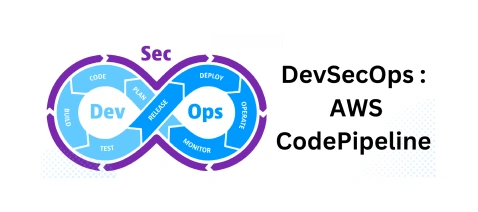
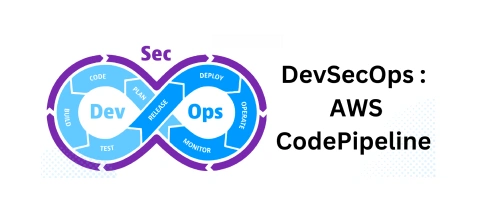
Image scanning, IaC scanning, and secret detection wired into CI through our DevSecOps practice. Kubernetes RBAC and admission policy for EKS, GKE, and AKS clusters.
In practice: the scanning gates we added to CIMET's AWS CodePipeline.
Compliance Evidence & Audit Support
Controls mapped to SOC 2, HIPAA, PCI-DSS, GDPR, and ISO 27001. Config conformance packs produce evidence every day, not once a year. Start from our AWS security checklist for HIPAA, SOC 2 and PCI-DSS.
You do not have to take the whole list. Many engagements start as an assessment and stop there, with the report handed to an internal team. Where the wider environment also needs attention, we run this alongside an infrastructure audit or a cloud migration.
Cloud Security Challenges We Solve
Misconfigurations are found by an auditor, not by your team
A public S3 bucket, an open security group, or an unencrypted snapshot sits in the account until someone external looks. Nobody owns a daily check.
Our Solution
AWS Config conformance packs and Security Hub CIS standards run daily across every account. Each finding gets a named owner and is tracked to closure. In practice: the centralized security account we built for Synaptic.
IAM permissions grew broad and nobody can safely narrow them
Roles accumulated wildcards over years of incidents and deadlines. Tightening them risks breaking production, so the broad policy stays in place.
Our Solution
IAM Access Analyzer generates least-privilege policies from CloudTrail history, so permissions are cut against observed usage rather than guesswork. Every change ships as a Terraform pull request and rolls back cleanly.
GuardDuty findings go to a mailbox nobody reads
Detection is switched on per account, alerts arrive as email, and nothing reaches a person on call. The signal exists; the response does not.
Our Solution
Findings from every account aggregate into one security account and get filtered against a tuned baseline. What survives pages the on-call engineer through the same rotation as production alerts, run by our SRE team.
New AWS accounts are created with no guardrails
Teams need accounts quickly, so they get created by hand. Logging, encryption defaults, and network baselines differ per account, and nobody notices for months.
Our Solution
Control Tower with Service Control Policies and an account factory. Every new account inherits logging, encryption, and network baselines at creation. In practice: the multi-account structure we built for EyeControl.
Security review happens after the code is written
A pre-release check finds issues when the change is expensive to undo. Under deadline pressure the check gets waived, and the finding ships to production.
Our Solution
Scanning moves into the pipeline: secret detection on commit, dependency and image scanning in CI, IaC checks before apply. In practice: the DevSecOps pipeline we built for CIMET.
Every audit restarts evidence collection from scratch
SOC 2 and ISO 27001 ask for proof that controls ran all year. When controls are manual, teams spend weeks gathering screenshots and access lists.
Our Solution
Controls run as Config rules and conformance packs, so evidence accumulates continuously and exports per framework. Audit prep becomes a download instead of a project.
How a Cloud Security Engagement Works
Five stages, from the first read of the environment to steady-state security operations. Many clients stop after stage three.
Security work rarely starts on a clean environment. We usually inherit accounts built over years by engineers who have since moved on. Stage one is documentation as much as assessment. Where the wider estate also needs work, we run this next to an infrastructure audit or AWS consulting engagement.
Assessment & Baseline
Read every account against CIS Benchmarks and the Well-Architected security pillar. Inventory identities, public exposure, encryption, logging coverage, and network paths. Output is a ranked finding list with effort estimates and a diagram of what exists today.
Risk Prioritization & Roadmap
Rank findings by exploitability and blast radius rather than scanner severity. Agree what gets fixed this sprint and what needs an architecture change. Accepted risk gets a documented owner and a review date.
Control Implementation
Ship the fixes as Terraform: IAM policies, SCPs, network rules, KMS keys, Config rules, and GuardDuty across accounts. Every change is peer-reviewed and reversible.
Detection & Response Wiring
Aggregate findings into the security account, tune the baseline to cut noise, and route alerts to on-call. Write containment runbooks for the incident types this environment can produce.
Operations & Review
24/7 monitoring, monthly posture reports, quarterly access reviews, and re-assessment against drift. Controls stay in code, so the environment does not decay between reviews.
Ready to find out where your cloud is exposed?
Get a free cloud security assessment for one AWS account: CIS Benchmark scan, IAM review, and a ranked finding list.
Talk to a Cloud Security ConsultantCloud Security Consulting Engagements We Deliver
Five ways teams engage our cloud security consulting team, from a one-week assessment to fully managed security operations.
Cloud Security Assessment
A fixed-scope review of one or more cloud accounts against CIS Benchmarks and the Well-Architected security pillar. You get a ranked finding list, remediation effort estimates, and a diagram of the current architecture. It runs in one to three weeks and ends there if that is all you need.
Remediation & Hardening Sprint
We fix what the assessment found: IAM tightening, network segmentation, encryption, logging coverage, and guardrails. Everything arrives as Terraform pull requests your engineers review and merge, so the change history stays in your repository.
Multi-Account & Landing Zone Security
AWS Organizations design, Control Tower guardrails, and Service Control Policies. A dedicated security tooling account aggregates CloudTrail, Config, GuardDuty, and Security Hub. Pairs with our AWS landing zone services for greenfield estates.
Compliance Readiness Advisory
Control mapping, gap analysis, and evidence automation for SOC 2, HIPAA, PCI-DSS, and ISO 27001. We also support you during the audit. Application-layer testing is scoped separately through VAPT services.
Managed Cloud Security Operations
Ongoing 24/7 monitoring, finding triage, patch and vulnerability management, quarterly access reviews, and incident response. Runs standalone or inside an AWS managed services agreement with shared SLAs.
CSPM Tool, In-House Hire, or Cloud Security Services
Three ways to close the same gaps. The right one depends on whether you need findings, fixes, or someone on call at 2 AM.
| Capability | CSPM tool alone | In-house security hire | SquareOps cloud security services |
|---|---|---|---|
| Finds misconfigurations | Yes, continuously | Yes, once tooling is configured | Yes — Config, Security Hub, CIS conformance packs |
| Fixes what it finds | Reporting only; some tools offer guided remediation | Yes, at one person's throughput | Yes — remediation shipped as Terraform pull requests |
| Multi-account and network design | Out of scope | Depends on that hire's background | Included — Organizations, SCPs, Transit Gateway, Network Firewall |
| 24/7 incident response | Alerting only | Business hours, single point of failure | Included — SRE on-call rotation with containment runbooks |
| Compliance evidence | Framework dashboards | Collected manually per audit | Config evidence produced daily, plus audit support |
| Time to first value | Days to deploy, months to work the backlog | 2–4 months to hire and onboard | 1–3 weeks to a ranked finding list |
| Cost shape | Per-resource subscription, grows with the estate | $150,000–$250,000 per year fully loaded | Fixed-scope project or monthly retainer |
A CSPM tool on its own is the right answer when you already have a security team with spare capacity. In that case the tool is not the bottleneck; people are. Salary range reflects US market rates for a cloud security engineer; timelines are indicative and depend on estate size.