Introduction
Most engineering problems eventually show up as business problems. A release that slips by two weeks delays revenue. An outage during a sales campaign loses customers. A cloud bill that grows faster than usage erodes margin. A failed security questionnaire stalls an enterprise deal.
The numbers behind these problems are significant. Flexera's 2026 State of the Cloud report estimates that 29% of cloud spend is wasted, the first increase in five years, driven largely by AI workloads. Uptime Institute's 2026 outage analysis found that 57% of organisations said their most recent major outage cost more than $100,000.
A DevOps service provider helps close the gap between how your software is built and what your business needs from it. If you're new to the model, our explainer on what a DevOps service provider is covers the basics. This article focuses on outcomes: eight common business challenges, why they happen, and how modern DevOps practices and tools solve them.
At a glance: business problems and DevOps solutions

| Business challenge | What it costs you | DevOps solution |
|---|---|---|
| Slow, risky releases | Delayed revenue, lost market share | CI/CD, automated testing, GitOps |
| Frequent downtime | Lost sales, SLA penalties, churn | SRE, observability, auto-scaling |
| Rising cloud bills | Shrinking margins | FinOps, rightsizing, autoscaling |
| Security and compliance gaps | Breaches, failed audits, stalled deals | DevSecOps, policy as code |
| Scaling bottlenecks | Poor customer experience at peak | Kubernetes, Infrastructure as Code |
| DevOps skills gap | Slow hiring, burnout, key-person risk | Managed DevOps, embedded engineers |
| Legacy systems | High maintenance cost, slow change | Cloud migration, modernisation |
| Tool sprawl and developer friction | Low productivity, inconsistent quality | Platform engineering, golden paths |
Challenge 1: Slow, risky software releases
The business problem. Features take weeks to reach customers. Releases happen late at night, need many people on a call and often break something. Product teams lose confidence and competitors ship first.
Why it happens. Manual builds, long-lived branches, little automated testing and hand-run deployments.
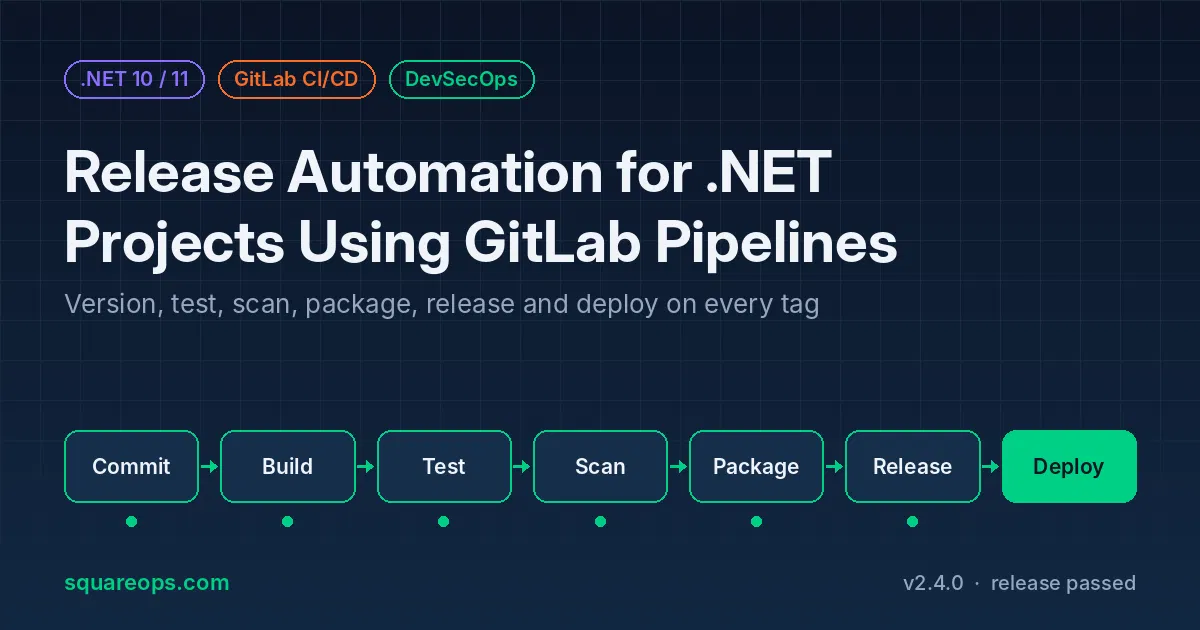
The DevOps solution. A provider builds CI/CD pipelines with GitHub Actions, GitLab CI/CD or Jenkins that test, scan and package every change automatically. Reusable pipeline templates keep every team consistent, and GitOps tools such as Argo CD deploy from Git with one-click rollback. Progressive delivery (canary and blue-green releases) limits the impact of a bad change. Our CI/CD consulting service focuses on exactly this.
The outcome. Smaller, more frequent releases, shorter lead times and fewer failed changes.
Challenge 2: Frequent downtime and slow recovery
The business problem. Outages during peak hours cost revenue, trigger SLA penalties and drive customers to competitors. Incidents take hours to diagnose.
Why it happens. Limited monitoring, alert noise, single points of failure, manual changes and no clear on-call process. Uptime Institute notes that failing to follow procedures is the leading driver of human-error outages.
The DevOps solution. Site reliability engineering (SRE) brings service level objectives (SLOs), error budgets, runbooks and blameless post-incident reviews. Observability built on OpenTelemetry, Prometheus and Grafana gives teams metrics, logs and traces in one place, and AI-assisted incident tools now correlate alerts and suggest likely causes. Multi-AZ architectures, health checks and automated failover reduce the blast radius. A managed 24x7 SRE service adds round-the-clock coverage without building a night shift.
The outcome. Higher availability, faster mean time to recovery and fewer repeat incidents.
Challenge 3: Rising and unpredictable cloud costs
The business problem. The cloud bill grows faster than revenue, and finance can't tell which product or team is responsible. AI workloads with expensive GPUs make it worse.
Why it happens. Oversized instances, idle resources, missing tags, no commitment strategy and no shared ownership of spend.
The DevOps solution. FinOps practices, as defined by the FinOps Foundation, make costs visible by team and service. Providers rightsize workloads, clean up idle resources, apply Savings Plans or Reserved Instances, and use autoscalers such as Karpenter to match Kubernetes capacity to demand. Cost checks can even run in CI so expensive changes are caught before deployment. Learn more about our cloud cost management approach.
The outcome. Lower, predictable spend and clear cost ownership.
Challenge 4: Security and compliance pressure
The business problem. Enterprise customers send long security questionnaires and ask for SOC 2 or ISO 27001 reports. A breach or failed audit can end a deal or damage the brand.
Why it happens. Security is checked at the end, secrets live in code, permissions are too broad and evidence is gathered manually before each audit.
The DevOps solution. DevSecOps "shifts security left": secret detection, dependency and container scanning, signed images and SBOMs run in every pipeline. Policy as code with Open Policy Agent blocks non-compliant infrastructure before it reaches production, and continuous compliance tools collect audit evidence automatically. Our DevSecOps consulting team embeds these controls into existing workflows.
The outcome. Fewer vulnerabilities, faster audits and shorter enterprise sales cycles.
Challenge 5: Scaling bottlenecks
The business problem. The platform slows down or fails during launches, sales events or rapid customer growth.
Why it happens. Manually provisioned servers, monolithic deployments and no tested capacity plan.
The DevOps solution. Infrastructure as Code with Terraform or OpenTofu makes environments reproducible in minutes. Containers on managed Kubernetes (EKS, AKS or GKE) scale horizontally with autoscalers, and load testing validates capacity before big events.
The outcome. Consistent performance at peak without over-provisioning the rest of the year.
Challenge 6: The DevOps skills gap
The business problem. Hiring experienced DevOps, SRE and cloud security engineers is slow and expensive. Often one person holds all the knowledge, creating key-person risk and burnout.
Why it happens. Demand for cloud-native skills far outpaces supply, and modern stacks span many specialities.
The DevOps solution. A provider gives you a full team of specialists, covering cloud architecture, Kubernetes, security and FinOps, through flexible models: project-based delivery, monthly managed services or engineers embedded in your team. Good providers document everything in code and runbooks so knowledge stays with you.
The outcome. Senior expertise on demand, less hiring risk and a team that can focus on product work.
Challenge 7: Legacy systems and slow modernisation
The business problem. Ageing on-premise systems are costly to maintain, hard to change and increasingly risky as hardware and operating systems reach end of life.
Why it happens. Fear of disruption, unclear dependencies and lack of in-house migration experience.
The DevOps solution. A structured cloud migration starts with a dependency map and a per-workload decision (rehost, replatform, refactor or retire), builds a secure landing zone as code, then moves workloads in waves with tested cutover and rollback plans. Programmes such as AWS's Migration Acceleration Program can offset part of the cost.
The outcome. Lower run costs, modern tooling and a platform that can evolve.
Challenge 8: Tool sprawl and developer friction
The business problem. Every team uses different tools and scripts. Developers wait days for environments and spend more time on configuration than on features.
Why it happens. Organic growth without standards, and no team responsible for the developer experience.
The DevOps solution. Platform engineering creates an internal developer platform with self-service templates, often built on Backstage. "Golden paths" give teams a paved road from new service to production, with security and observability built in. Google's 2025 DORA report found 90% of organisations now run at least one internal platform, and that platform quality is key to getting value from AI coding tools.
The outcome. Faster onboarding, consistent quality and happier developers.
How to measure the results
Agree on a baseline before work starts, then track progress monthly. Combine engineering metrics with business ones:
| Metric | Type | What improvement looks like |
|---|---|---|
| Deployment frequency | DORA | From monthly to daily or on demand |
| Lead time for changes | DORA | From weeks to hours |
| Change failure rate | DORA | Fewer releases causing incidents |
| Failed deployment recovery time | DORA | From hours to minutes |
| Uptime against SLO | Reliability | Consistently meeting targets |
| Cloud cost per customer or transaction | Business | Falling as you grow |
| Time to pass a security review | Business | Days instead of weeks |
Choosing the right DevOps service provider
Look for a partner that matches your stack and your stage of growth:
- Proven cloud credentials, such as AWS, Azure or Google Cloud partner tiers and relevant competencies.
- Security maturity, ideally with its own ISO 27001 or SOC 2 controls.
- Case studies in your industry with measurable outcomes.
- Everything as code: infrastructure, pipelines and runbooks you own, with no lock-in.
- Clear SLAs for response times if you need ongoing operations.
- Flexible engagement models: fixed-scope projects, monthly managed services or embedded engineers.
Start with a short assessment of your architecture, pipelines and cloud bill. It should produce a prioritised roadmap tied to the business problems that matter most to you.
Conclusion
Slow releases, outages, cloud waste, compliance pressure, scaling limits, skills gaps, legacy systems and developer friction all share a root cause: delivery and operations that haven't kept pace with the business. A DevOps service provider fixes that with automation, proven practices and specialist expertise, and ties every change to measurable outcomes.
Ready to turn your biggest engineering bottleneck into an advantage? Explore SquareOps DevOps services and book an architecture review with a senior engineer.