
Introduction
The importance of DevOps has never been easier to see. Every company now ships software, whether it sells it or not: a bank's app, a retailer's checkout, a hospital's patient portal. How quickly and safely that software changes decides how quickly the business can change.
DevOps is the set of practices that makes fast, safe change possible. When this article was first written in 2023, it compared DevOps then with 2018 and guessed at the future. Most of those guesses have now arrived. AI writes and reviews code, platform teams build internal developer platforms, and security is part of every pipeline. In 2026, the question is no longer whether DevOps matters, but whether your organization is doing the version that works today.
This guide explains what DevOps is, why it matters more now than before, how to measure it, what it looks like in 2026, where teams go wrong, and how to start.
What DevOps is (and isn't)
DevOps combines software development and IT operations into one shared way of working. The original post called it "Development Operations"; the term is actually a blend of the two words, and the idea is that the people who build software and the people who run it share goals, tools and responsibility.
In practice, DevOps rests on four habits:
- Small, frequent changes instead of large, risky releases
- Automation of builds, tests, infrastructure and deployments
- Fast feedback from monitoring, users and incidents back to the team
- Shared ownership, so the team that writes a service also cares how it runs
DevOps is not a job title, a tool or a team you can buy. Hiring "DevOps engineers" and installing Jenkins without changing how teams work produces a new silo, not DevOps. For the fundamentals, see What DevOps is.

Why DevOps matters more in 2026
Three shifts have raised the stakes since the original article.
AI has sped up coding, and exposed slow delivery. The 2025 DORA report, based on nearly 5,000 technology professionals, found 90% now use AI at work and more than 80% say it has made them more productive (Google Cloud). But it also found AI adoption is still associated with less stable software delivery. AI accelerates whatever system it lands in. Teams with strong testing, review and deployment practices get faster; teams without them ship more bugs, faster.
Regulation now reaches the pipeline. Under the EU Cyber Resilience Act, manufacturers of products with digital elements have had to report actively exploited vulnerabilities and severe incidents since 11 September 2026, with full requirements from 11 December 2027 (legal analysis). India's DPDP Rules add security and breach-reporting duties from May 2027. Meeting these without automated, auditable delivery is very hard.
Cloud and AI bills are now engineering problems. Usage-based pricing means architecture choices show up directly on the invoice. The teams that deploy the code are best placed to control what it costs.
The business benefits of DevOps
The original post's benefits still hold: faster time-to-market, fewer errors, better alignment with customers. Here is what they mean in practice:
| Benefit | What changes | How you'd notice |
|---|---|---|
| Faster delivery | Changes move from commit to production in hours, not weeks | Features and fixes reach customers sooner |
| Higher stability | Small changes, automated tests and quick rollback | Fewer outages, smaller blast radius |
| Lower risk | Security and compliance checks run on every change | Fewer audit findings and late surprises |
| Lower cost | Automation replaces manual toil; teams own their spend | Ops headcount scales slower than the product |
| Better retention | Less firefighting and weekend deployments | Lower burnout and attrition i |
DevOps Tools and Cloud Adoption
The DevOps tools landscape in 2018 was still maturing. While popular tools like Jenkins, Docker, and Kubernetes had been adopted, seamless integration between these tools was not yet streamlined. Additionally, while the potential of cloud computing was recognized, many organizations were only beginning to explore hybrid cloud models. Full-scale cloud adoption was far from the norm.
What DevOps looks like in 2026
The original article's four "future trends" (AI, DevSecOps, serverless and platform engineering) are now everyday practice. Here is what each looks like today, plus three areas the original missed.
AI across the delivery lifecycle
AI is no longer an "AIOps" add-on for predicting alerts. It now writes code, reviews pull requests, generates tests, explains build failures and investigates incidents. AWS DevOps Agent, for example, became generally available in March 2026 and correlates alarms, logs and recent deployments to propose a likely root cause.
The lesson from DORA's 2025 research is that AI is an amplifier. It also found 30% of respondents have little or no trust in AI-generated code. Practical guardrails: keep humans approving production changes, require tests for AI-written code, and track change failure rate closely as AI use grows. SquareOps' MLOps and AI infrastructure team helps teams set this up.
Platform engineering and internal developer platforms
Platform engineering, which the original called "a cornerstone," is now how most larger organizations deliver DevOps at scale. Gartner predicted that by 2026, 80% of large software engineering organizations would have platform teams providing reusable services and tools (Gartner).
A platform team builds an internal developer platform: self-service environments, standard pipelines and "golden paths" so product teams can ship without becoming infrastructure experts. DORA's 2025 report found a high-quality internal platform is one of the conditions that lets AI improve organizational performance. Read more about golden paths and our platform engineering services.
DevSecOps and software supply chain security
The original predicted that DevSecOps would "mature and become standard practice." It has. The focus has moved from scanning code to securing the whole software supply chain:
- Shift-left checks in every pipeline: static analysis, dependency and container scanning, and secrets detection
- Software bills of materials (SBOMs) so you know exactly what's inside each release, a core expectation under the EU Cyber Resilience Act
- Signed builds and provenance using frameworks such as SLSA, so you can prove an artifact came from your pipeline
- Policy as code that blocks non-compliant infrastructure before it is created
See our DevSecOps consulting and policy as code guide.
GitOps, infrastructure as code and the Terraform licence change
Infrastructure as code (IaC), which the original mentioned under platform engineering, is now the default way to manage cloud resources. GitOps takes it a step further: Git becomes the single source of truth, and tools such as Argo CD or Flux continuously reconcile what's running with what's declared.
One change the original couldn't anticipate: HashiCorp moved Terraform from an open-source licence to the Business Source License in August 2023. The community forked it as OpenTofu under the Linux Foundation, and IBM completed its acquisition of HashiCorp in February 2025. Both tools remain widely used; teams should check whether the BSL affects how they use Terraform and decide deliberately. SquareOps' Terraform consulting team works with both.
Observability and SRE
You can't improve what you can't see. Modern teams instrument services with OpenTelemetry, the CNCF standard for traces, metrics and logs, and set service level objectives (SLOs) that define "good enough" reliability. Site reliability engineering (SRE) uses those SLOs and error budgets to balance shipping new features against keeping systems stable. Learn more about our monitoring and observability and 24x7 SRE services.
FinOps: cost as an engineering metric
In usage-priced clouds, every architecture decision has a price. Mature DevOps teams track cost per service or per customer next to latency and error rates, review it in the same dashboards, and treat a cost spike like any other regression. Our AWS cost optimization guide covers the practical steps.
Enhanced Collaboration
Today’s tools for communication and collaboration are robust and sophisticated, allowing for real-time collaboration and streamlined problem-solving. Platforms like Slack, Microsoft Teams, and GitHub have become commonplace, bringing teams together and making it easier to share information and resolve issues.
A Rich Landscape of DevOps Tools
The DevOps tools ecosystem has expanded significantly, with new tools like Terraform and Ansible joining the fray. Additionally, the integration of these tools has improved considerably, making it easier to set up and run DevOps pipelines. DevOps as a Service has emerged, enabling organizations to access pre-configured DevOps toolchains, reducing the setup time and complexity.
Cloud-Native DevOps
Cloud adoption has surged in the last five years, and most organizations now operate with a ‘cloud-first’ mentality. As a result, DevOps strategies have become closely intertwined with cloud-native architectures. Concepts such as containers and serverless computing are now central to DevOps practices, enabling even faster and more efficient software delivery.
DevOps and Business Value
DevOps, when implemented through experienced DevOps Consulting Services, has proven to be more than just a method for improving software delivery. It’s a strategy that delivers tangible business value. The enhanced speed of delivery means faster time-to-market, giving businesses a competitive edge. Improved collaboration results in fewer errors and higher quality software. Continuous feedback and iterative improvements lead to products that closely align with customer needs and expectations.
The Future of DevOps: Beyond 2026
Looking ahead, DevOps is poised to continue its evolution, shaped by technology trends and business needs. Let’s explore some of these future trends.
Artificial Intelligence and Machine Learning in DevOps
Artificial Intelligence (AI) and Machine Learning (ML) are set to play an increasingly significant role in DevOps. AI and ML can automate complex tasks, predict problems before they occur, and provide actionable insights to optimize DevOps processes. This trend is giving rise to AIOps, where AI is integrated with IT operations for enhanced automation and predictive analytics.
Maturing DevSecOps
While the integration of security in DevOps – known as DevSecOps – has begun gaining traction, it is expected to mature and become standard practice in the future. Security considerations will be included at every stage of the development lifecycle, enabling the proactive identification and resolution of vulnerabilities and ensuring robust, secure software.
Serverless Architectures
Serverless architectures are anticipated to become more popular in the DevOps landscape. By eliminating the need for server management, developers can focus solely on writing code, further accelerating software delivery. This approach also offers cost efficiency as you only pay for the compute time you consume.
Platform engineering
Platform engineering is becoming a cornerstone in the evolving DevOps landscape. It focuses on creating standardized, efficient environments for developers, reducing the inconsistencies and challenges often faced in diverse settings. A key feature is the development of self-service platforms, granting developers the autonomy to provision resources and manage services, thereby expediting processes. Central to platform engineering is the concept of Infrastructure as Code (IaC). This ensures that infrastructure remains consistent, is version-controlled, and can be managed similarly to application code. This unified platform approach enhances collaboration by bridging the divides between development, operations, and security teams. Additionally, platform engineering emphasizes adaptability, ensuring that as new technologies emerge, they can be seamlessly integrated into the existing framework. In essence, platform engineering is set to play a pivotal role in future-proofing DevOps, ensuring agility, and facilitating the integration of innovative technologies.
How SquareOps helps teams adopt DevOps
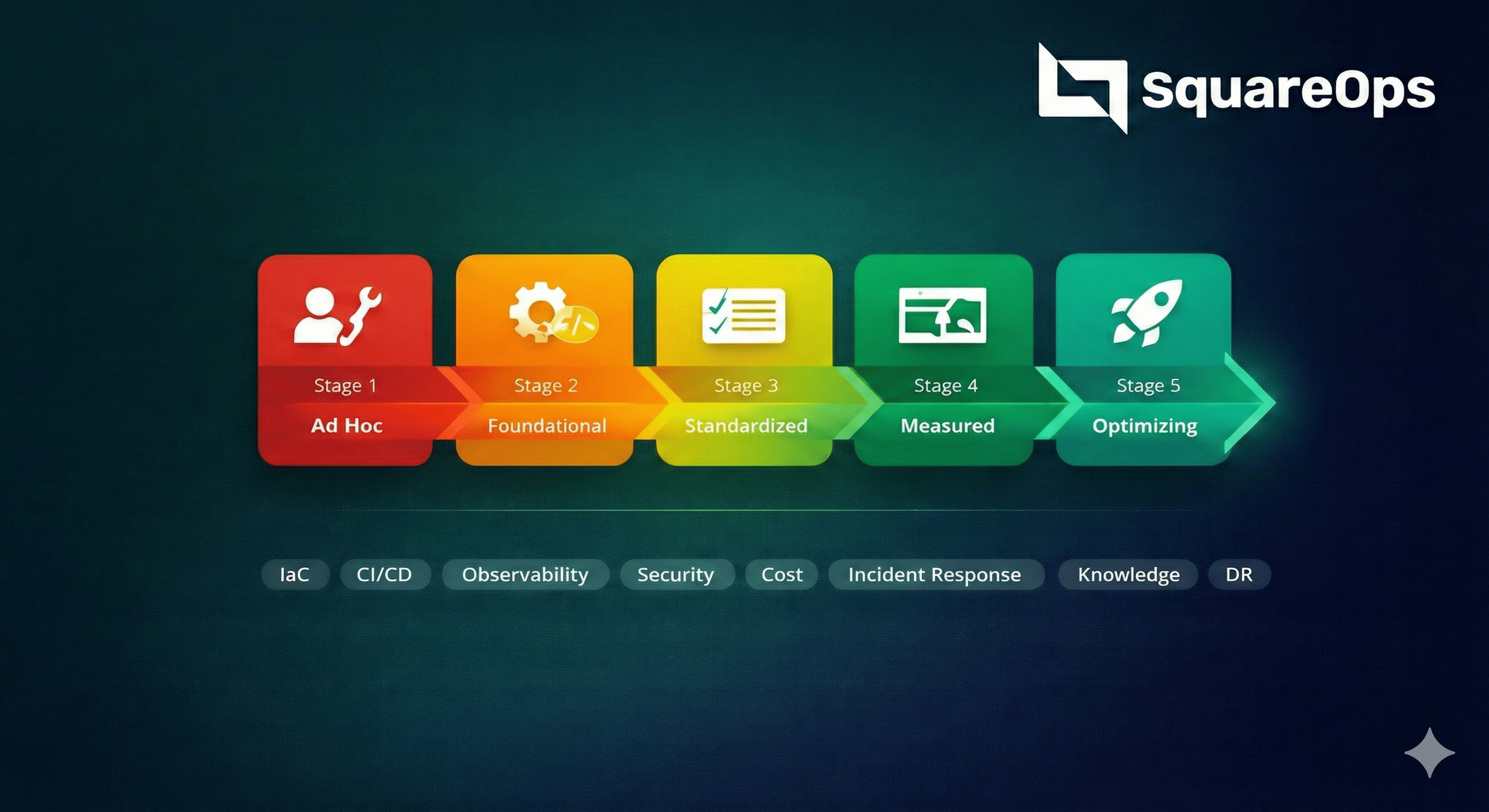
SquareOps is a cloud-native DevOps and managed services company based in Gurugram, working with SaaS, fintech, e-commerce and healthcare teams across India, the US, the UK, Europe and the Middle East. We help at each stage of the roadmap above:
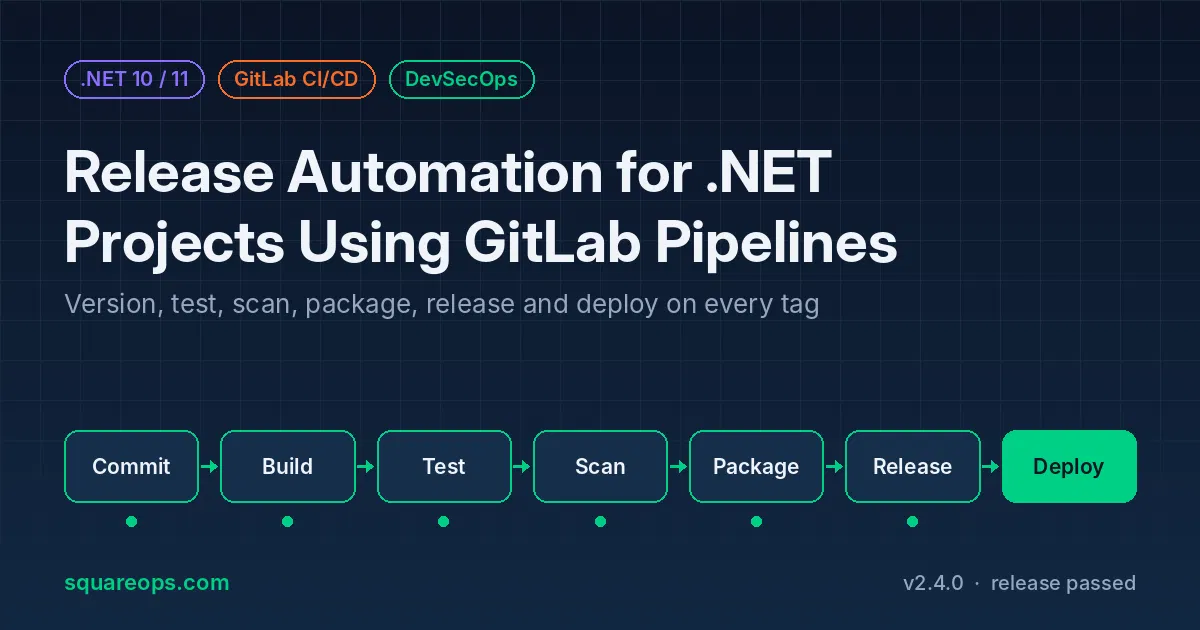
- DevOps consulting and CI/CD pipelines to automate the path to production
- Managed Kubernetes on Amazon EKS and GitOps for safe, repeatable deployments
- Platform engineering and our Atmosly internal developer platform for self-service at scale
- Open-source Terraform modules for Amazon EKS we use in client builds
Conclusion
DevOps matters in 2026 for the same reason it mattered in 2018: businesses that change software quickly and safely outlearn the ones that can't. What has changed is the toolkit and the stakes. AI amplifies good and bad delivery practices alike, platforms are how DevOps scales, and security and cost now sit inside the pipeline.
Start small: measure one team, automate its path to production, and expand what works. If you'd like help, talk to SquareOps about a DevOps maturity assessment.