The "Success Trap": When SaaS Scaling Breaks Infrastructure
SaaS companies often start with a simple setup. But as the tenant count grows from 10 to 1,000, problems emerge: noisy neighbors, slow database migrations, manual tenant onboarding, and cloud bills that grow faster than revenue.
SquareOps helps you build a "Tenancy-Aware" infrastructure that ensures isolation, improves security, and provides clear visibility into your cost-per-tenant metrics.
Common Scaling Bottlenecks:
Multi-Tenant Architecture Patterns
The Silo Pattern
BEST FOR ENTERPRISEEach tenant gets their own dedicated infrastructure (e.g., separate database, separate VPC). Maximum isolation, lowest risk.
- Guaranteed performance (no noisy neighbors)
- Tenant-specific encryption keys
- Easier compliance audits
- Higher infrastructure management overhead
The Pool Pattern
BEST FOR SMB/B2CTenants share resources (e.g., same K8s cluster, same database with row-level security). Maximum efficiency, lowest cost.
- Extreme cost efficiency (high resource sharing)
- Simplified, unified deployment model
- Instant tenant onboarding
- Requires robust Row-Level-Security (RLS)
SquareOps Advantage: We often implement a **Bridge Pattern**, giving your enterprise "Tier 1" clients a Silo experience while pooling your smaller "Tier 3" clients for cost efficiency.
Our SaaS Managed Services
Cost-Per-Tenant Visibility
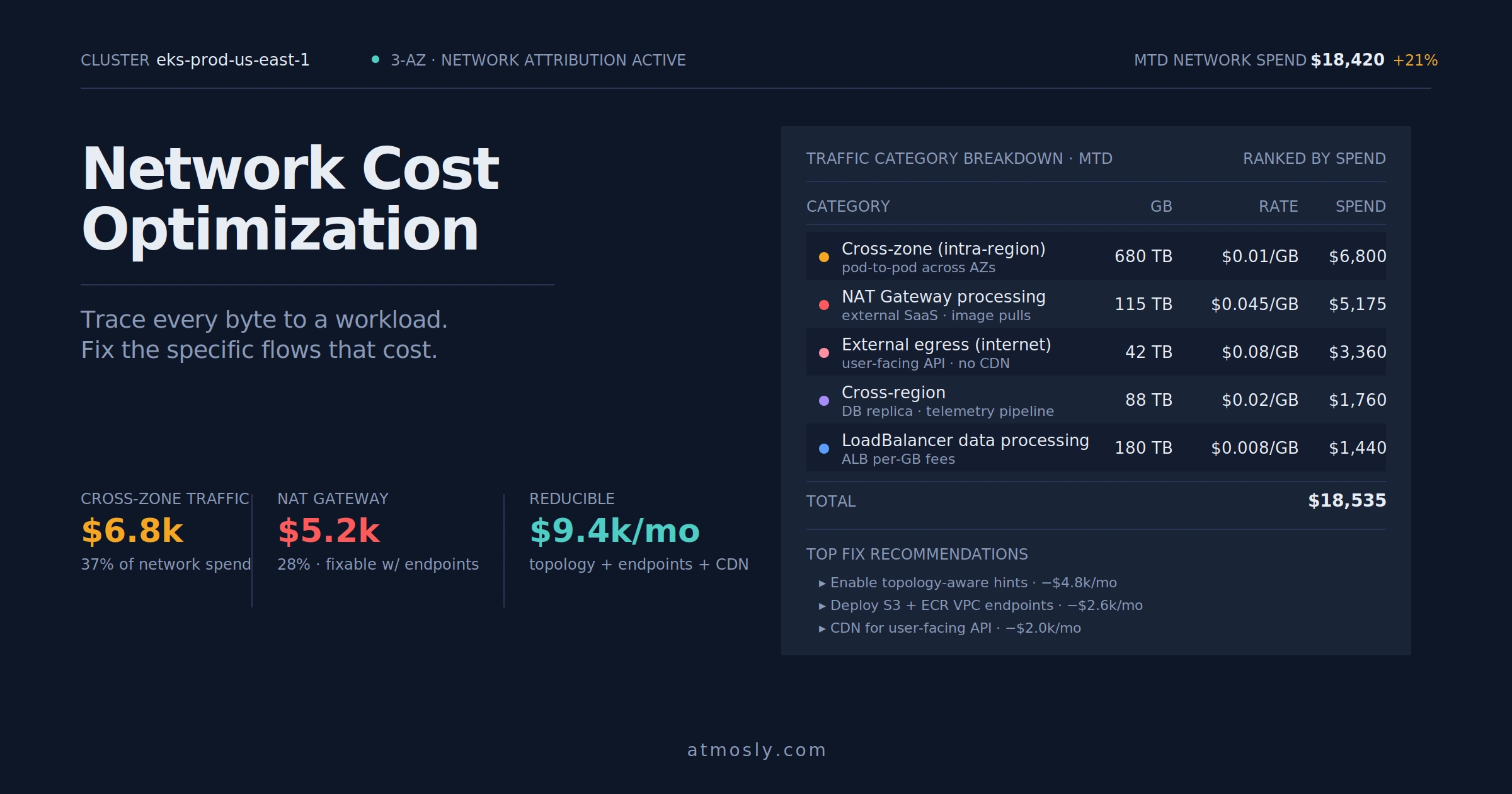
We implement tagging and monitoring (e.g., using Kubecost) so you know exactly which customer is driving your AWS bill.
Automated Onboarding
Infrastructure-as-Code (Terraform/Helm) templates that provision new tenant environments in minutes, not days.
SaaS-Level Security
SOC 2 ready infrastructure with strict data isolation, encryption-at-rest, and 24/7 vulnerability scanning.
SaaS Infrastructure FAQs
1. What is multi-tenancy in SaaS?
It's an architecture where a single instance of a software application serves multiple customers (tenants). Each customer's data is isolated from others.
2. How do you prevent "Noisy Neighbor" issues?
We use Kubernetes Resource Quotas and Limits, alongside prioritized scheduling, to ensure one tenant's traffic spike doesn't slow down others.
3. Can you help us move from Silo to Pool architecture?
Yes. We guide the refactoring of your database and application logic to handle shared resources while maintaining strict data boundaries.
4. How do you measure "Unit Cost" for SaaS?
We correlate your cloud billing data with application-level metrics (like tenant ID) to provide a "Cost-per-User" or "Cost-per-Transaction" report.
5. Do you provide 24/7 SRE support for SaaS?
Yes. Our team monitors your platform round-the-clock, handling everything from traffic spikes to server crashes before your customers notice.
6. How do you handle database migrations across 100s of tenants?
We implement automated migration pipelines that roll out changes sequentially or in batches, with automated rollbacks if a failure is detected.
7. Can you help with SOC 2 Type II compliance?
Absolutely. We implement the infrastructure controls, logging, and audit trails required to pass SOC 2 audits successfully.
8. What cloud providers do you support for SaaS?
We specialize in AWS, but also manage large-scale SaaS platforms on Google Cloud (GCP) and Microsoft Azure.
9. How do you automate tenant provisioning?
We use Terraform or Crossplane to define tenant resources as code, triggered by your application's "Sign Up" flow via API.
10. Do you support Global SaaS deployments?
Yes. We implement multi-region architectures with Global Load Balancing and Edge Caching to ensure low latency for users everywhere.
11. What is your response time for SaaS incidents?
Our standard response time for critical (P0) incidents is 15 minutes, with proactive monitoring that often flags issues before they become critical.
12. Can you help optimize our SaaS application performance?
Yes. We perform deep architectural reviews, identifying bottlenecks in the database, caching layer, or network configuration.
13. Do you handle disaster recovery for SaaS?
Yes. We implement automated backups, database replication, and "infrastructure-as-code" DR playbooks to ensure rapid recovery.
14. How do you handle secrets management for SaaS?
We use HashiCorp Vault or AWS Secrets Manager to ensure each tenant has isolated, rotating credentials.
15. Why hire SquareOps instead of an internal DevOps team?
You get a team of 24/7 experts for less than the cost of one senior hire, plus the experience of managing 50+ other SaaS platforms.
Essential SaaS Capabilities
Scale Your SaaS Without the Friction
Focus on building features that win customers. Let SquareOps handle the multi-tenant infrastructure complexity. Your scalable SaaS starts here.
Managing infrastructure for SaaS companies across the US, India, and Europe.